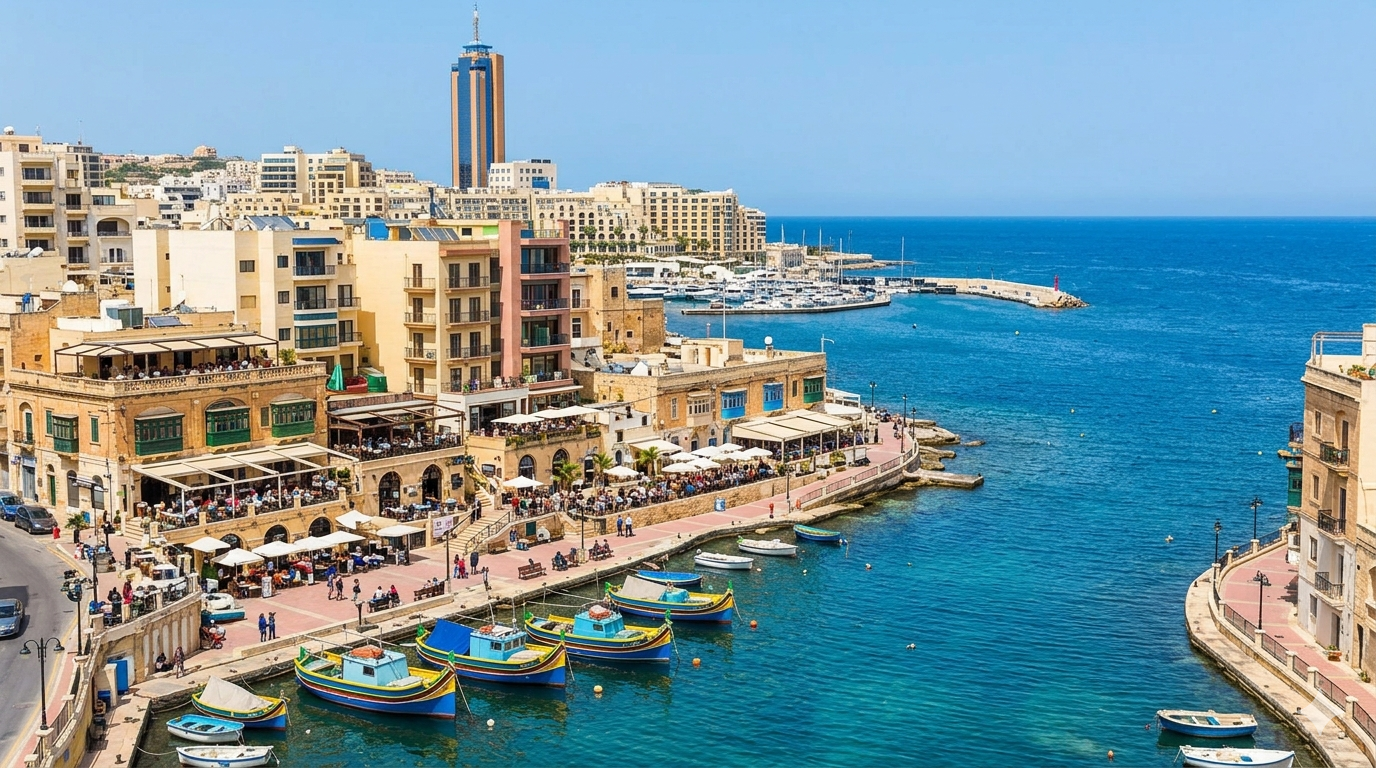
Most people planning a Malta trip picture Valletta and Mdina: walled cities, baroque cathedrals, honey-coloured stone that hasn’t changed in centuries. All of that is real and all of it is worth your time. But if that’s the entire trip, you’ll leave having seen where Malta used to be, not where it actually lives now. That place is St Julian’s, known locally as San Ġiljan. We’ve been based right in the centre of this town for eight years, not visiting, living here, and this guide is built entirely on that. It’s where the island eats, drinks, swims and works. There are at least 12 genuinely worthwhile things to do here, easily enough to fill three or four days without repeating yourself, and this guide covers all of them properly, plus the practical details, the family angle, and a few corrections to claims that circulate on other sites.
Where is St Julian’s?
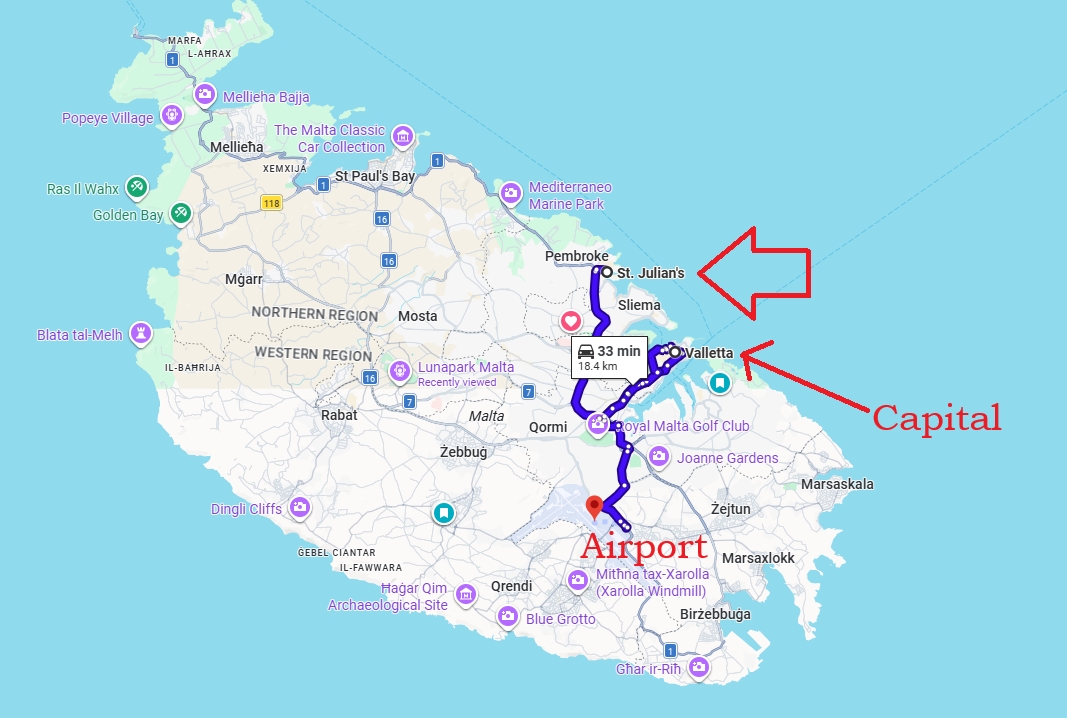
St Julian’s sits on the north-east coast of Malta, roughly 8 kilometres from the capital Valletta. It’s wedged between the quieter residential town of Pembroke to the north and the busier shopping town of Sliema to the south, connected to both by a coastal promenade that runs the entire length of the shoreline. It’s a compact place, just 1.6 square kilometres, with a population of around 14,700, which tells you something important: a lot of life is packed into a very small footprint. If you’re coming from Valletta, a taxi takes about 15 to 20 minutes. From Malta International Airport, expect roughly 20 to 30 minutes depending on traffic. Several bus routes, including 12, 13, 14 and 21, connect St Julian’s directly to Valletta, and direct buses also run down from Buġibba and St Paul’s Bay to the north. Wherever you’re based on the island, San Ġiljan is well within reach. Once you’re here, you won’t need transport at all. The entire town is walkable, and that’s one of its greatest qualities.
Why St Julian’s belongs on every Malta itinerary
San Ġiljan is the contemporary heartbeat of Malta. It’s where you’ll find the island’s tallest building standing a few streets from 300-year-old fishing boats, Michelin-recognised restaurants sharing a postcode with 2am pizza-by-the-slice kiosks, and a genuinely international community that’s reshaped what Maltese daily life looks like. Spend your whole trip in Valletta and Mdina and you’ll only get half the picture of what this island actually is today.
The 12 things worth doing in St Julian’s
1. Explore Paceville, Malta’s nightlife capital
Paceville isn’t one street of bars, it’s the entertainment capital of the entire island: a dense, walkable district of nightclubs, rooftop lounges, pubs and live music venues, all packed within a few hundred metres of each other. The energy shifts as the night goes on. By 8pm, people are settling into street-side pubs and casual restaurants. By midnight, the real Paceville begins, multi-level clubs running electronic music, hip-hop and commercial pop within steps of each other. Club-hopping is simply what people do here, no planning required. Hugo’s and Havana Club are the most consistent headline venues, drawing an international crowd and packing out every weekend. Footloose is another firm favourite, and The Thirsty Barber stands out from the standard club offering with a craft cocktail bar built around a barber-shop theme. For something more elevated, Club 22 at Portomaso brings a sophisticated, upscale club experience right on the marina, a more grown-up alternative to the main strip. After the clubs wind down, kiosks selling pizza al taglio and kebabs appear throughout Paceville in the early hours, quick, cheap, and exactly what you want at 2am. It’s part of the ritual. Worth knowing honestly: Paceville has a reputation, and some of it is earned. The area is very lively on weekend nights, and it’s also genuinely safe, with a visible police presence during peak hours. Stay aware of your belongings and stick to main streets walking back late, and you’ll have a brilliant time.
2. See Mercury Tower, Malta’s tallest building
Mercury Tower, designed by Zaha Hadid Architects and completed in 2023, is Malta’s tallest building at 122 metres and 32 floors, and one of the last projects personally signed off by Zaha Hadid before her death in 2016. Its twisting, fluid form, with a deliberate 12-degree reangling partway up the building, is unlike anything else on the island. Seeing it for the first time genuinely stops you in your tracks. The tower sits at the heart of a shopping and dining district built around its base, bringing together curated retail and immersive experiences in one of the most modern complexes in the country. It’s worth exploring as a destination in itself, not just a shopping stop. At the top of the tower is Anima Rooftop, a bar with panoramic views across the Maltese coastline, the harbour, and open Mediterranean stretching to the horizon, one of the most spectacular views in Malta. This is strictly an adults’ experience, but for those who can go, don’t miss it.
3. Walk the promenade to Sliema
One of the best free things you can do in Malta costs nothing and takes about 45 minutes each way. The coastal promenade from St Julian’s stretches south to Sliema, flat and wide the entire way along the edge of the Mediterranean. This isn’t a tourist attraction in the conventional sense, it’s simply a beautiful walk. Joggers, dog walkers, families and elderly locals share this path every single day. Along the route you’ll pass small kiosks selling fresh juice and ice cream, benches to sit and stare out to sea, and stretches of smooth limestone rock where people swim. Walk it late afternoon into sunset and the limestone buildings along the coast turn a deep gold as the light on the water becomes something you won’t forget. Early morning is equally worth it, when you’ll have the whole promenade almost entirely to yourself. Keep walking toward Sliema and you’ll pass Cat Park, a well-known local spot where dozens of community cats gather, and further on, Exile Park, with play areas popular with local families.
4. Discover Spinola Bay
Spinola Bay is the emotional heart of St Julian’s. This small, curved harbour is where traditional Maltese luzzu fishing boats sit in calm water, their painted eyes facing outward just as they have for generations. It’s the most photographed spot in town, and for good reason, especially at dusk, when restaurant lights reflect off the still water. Overlooking the bay is Spinola Palace, built in 1658 by the Italian knight Giovanni Spinola, the historic anchor around which the whole area grew. Walk down near the restaurants and you’ll find relaxed waterfront seating, traditional boats as your backdrop, and some of the nicest people-watching in Malta.
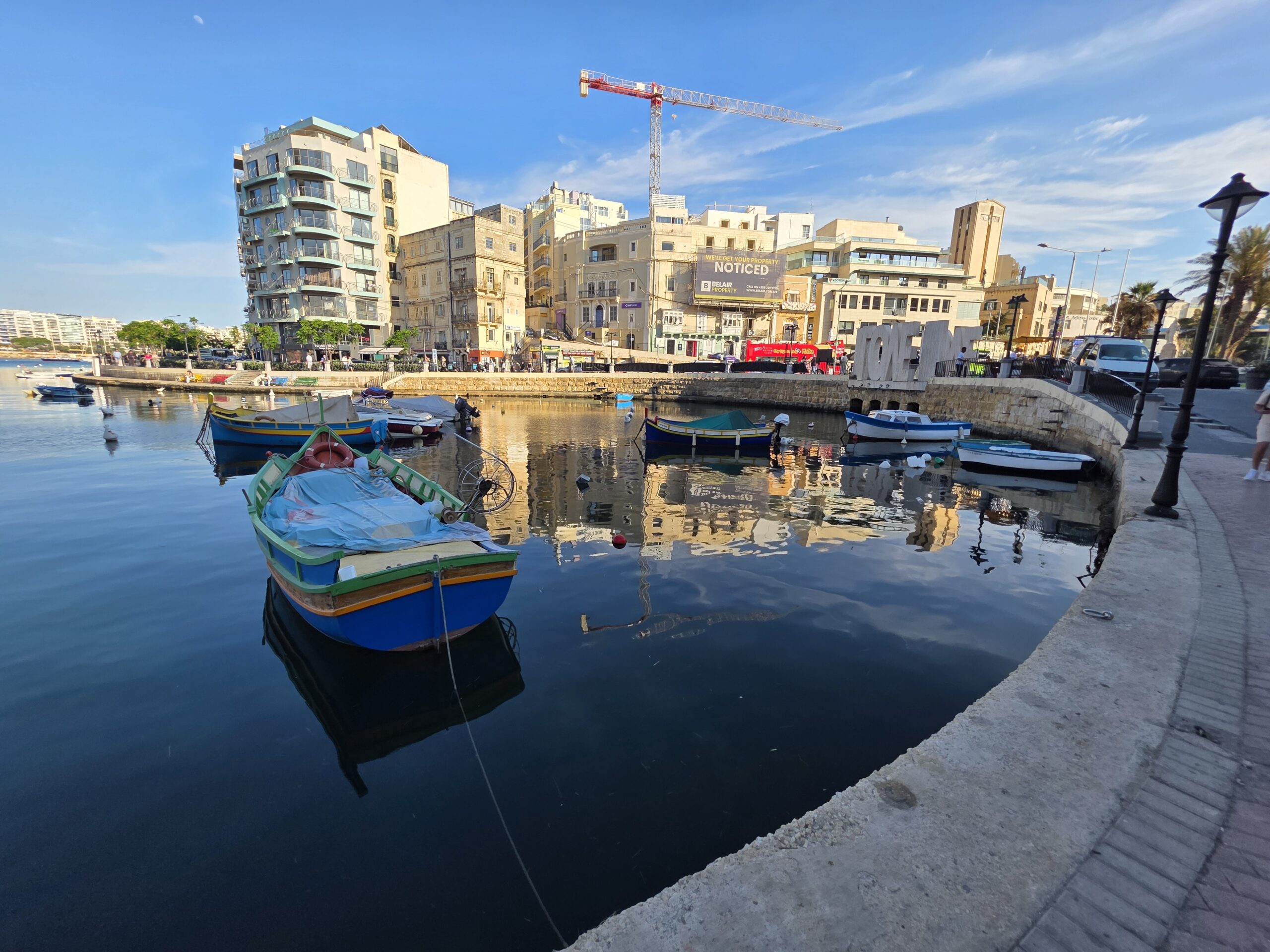
The bay’s other landmark is the Love Monument, created by Maltese architect Richard England and inaugurated in April 2003. The letters spelling LOVE are deliberately inverted and backwards, designed to be read correctly only in their reflection on the water below. It divided opinion sharply when it first appeared, and more than two decades on it’s become the defining image of the bay. It has a companion piece too, a sculpture called White Shadows in Fond Għadir bay near Sliema, part of the same visual link England designed between the two waterfronts. Spinola Bay also has a food court nearby with a wide range of options, and right alongside it, a free kids’ play area, making it a natural base for families at lunch or an early dinner.
5. Explore Portomaso Marina
If Spinola Bay is traditional Malta, Portomaso Marina is the island’s most glamorous face. This privately managed waterfront is home to dozens of luxury yachts in still water, surrounded by high-end apartments, the Portomaso Business Tower, and some of Malta’s finest restaurants and bars. Portomaso Casino is here too, for those who want an evening of it.
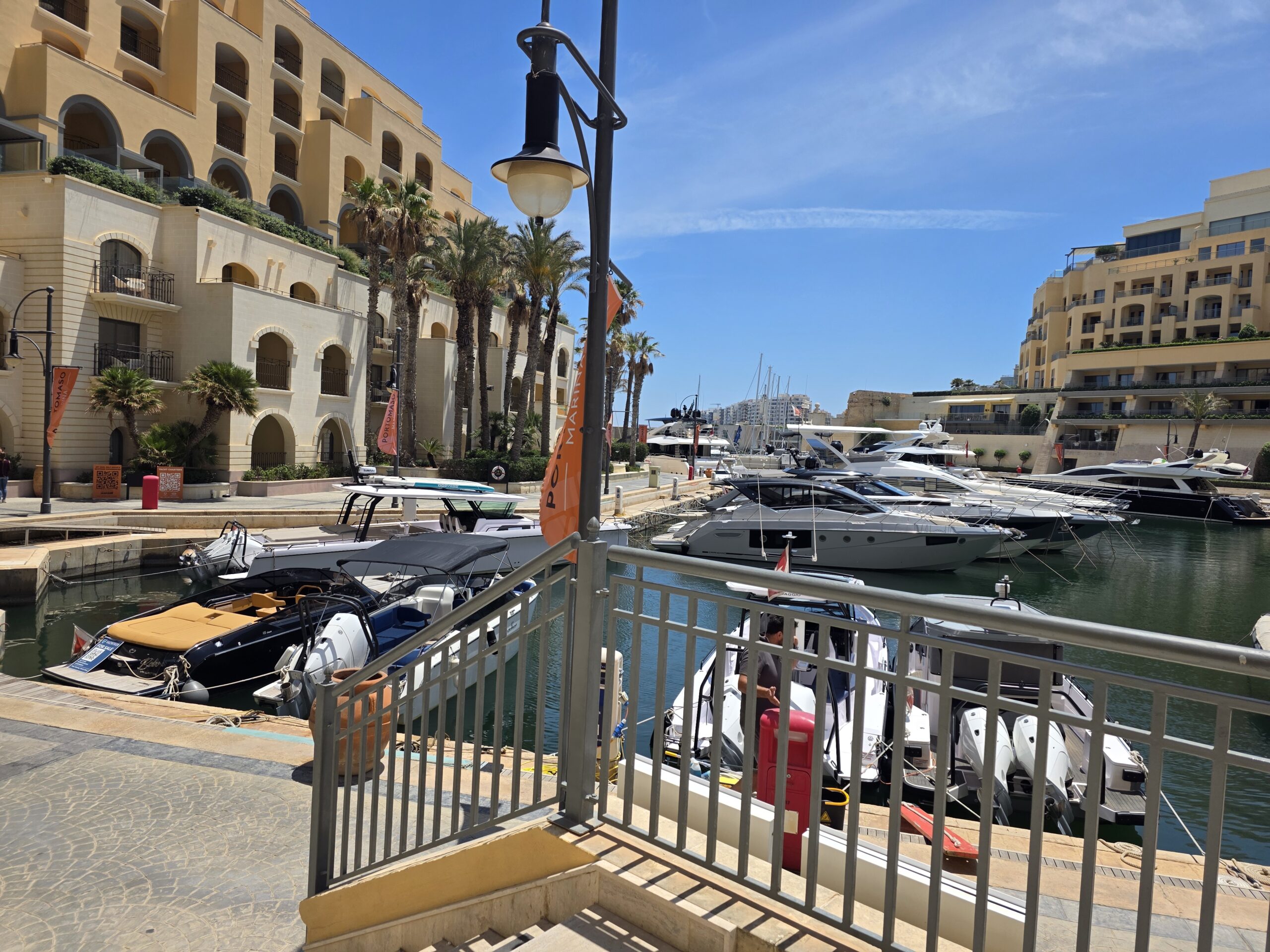
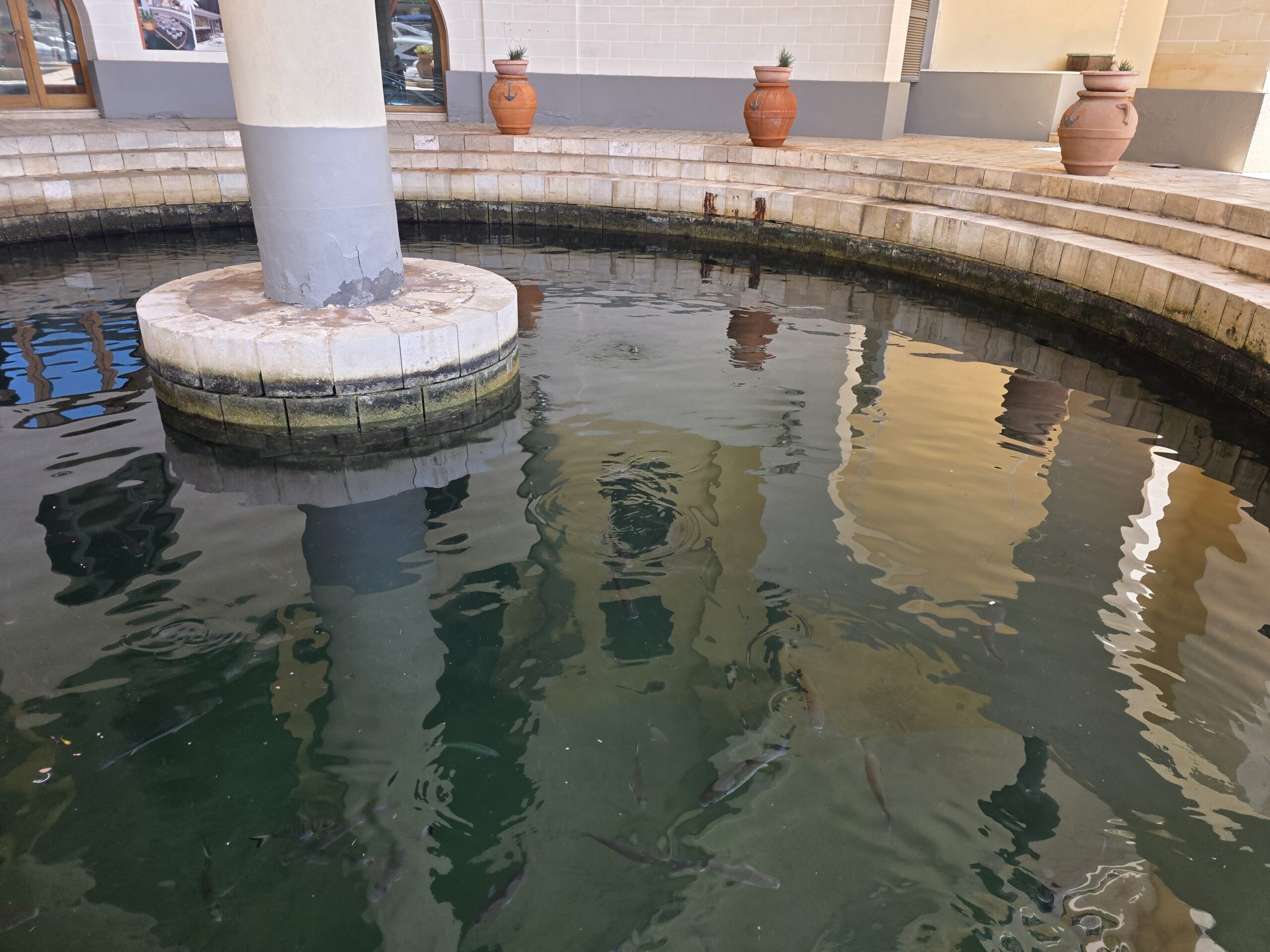
What most visitors don’t know is that the marina sits several levels below street level, reached by lift. There are three separate elevator access points: near the Rolex shop, near the Portomaso Tower, and near the Hilton Hotel. Take any of them down to the -5 level and you emerge into one of the most beautiful and underused corners of St Julian’s, a calm, elegant marina walkway away from the noise above. Our own habit: grab food from Alice, Tuk Tuk, or Ninja Bowl on the street above, take the elevator down, and eat by the fish pond at the Hilton overlooking the yachts. It feels like a local secret even though it’s right in the middle of everything. The fish pond at the Hilton, sitting just below the main lobby level, is a small charming detail most people walk straight past, and children love it.
6. Swim at Balluta Bay
Balluta Bay is a small urban beach combining a sandy bathing area with rocky limestone platforms, overlooked by the neo-Gothic Church of Our Lady of Mount Carmel and the historic buildings of Balluta Square. It’s popular with both locals and visitors for easy sea access in a genuinely scenic setting. One important note before you jump in: always check the current water quality status before swimming here. Balluta Bay, along with St George’s Bay and Fond Għadir in Sliema, has been affected periodically in recent years by contamination linked to stormwater and sewage overflow, and swimming advisories have been issued and lifted multiple times. The Environmental Health Directorate (EHD), part of Malta’s Health Ministry, is the correct authority for this, not the Environment and Resources Authority, which handles environmental matters more broadly but doesn’t set bathing water advisories. Check current notices at the bay itself or search “Malta bathing water quality” for the latest EHD status before you visit. If a warning is in place at Balluta, don’t automatically assume St George’s Bay is clear either, since it’s affected by the same seasonal issues; check both before deciding where to swim.
7. Swim at St George’s Bay
If you’re travelling with younger children or simply prefer sand underfoot, St George’s Bay is the answer. It sits right at the bottom of the Paceville district and features a proper stretch of imported sand, one of the very few sandy beaches in this part of Malta. In summer it gets busy with swimmers, sunbathers and language students on a break, but it’s never overwhelming. The convenience alone makes it special: no bus, no drive, just walk down.
8. Museum of Illusions Malta (paid)
One of the newest and most enjoyable attractions in St Julian’s, the Museum of Illusions is packed with optical illusions, mind-bending rooms and interactive exhibits designed to trick your brain and produce genuinely funny photos. It’s the kind of place where you stay longer than planned, because every room produces a new moment of disbelief. Great for couples, families and groups, and one of the most entertaining hours you can spend on a rainy afternoon or a slow morning.
9. Eat your way around the food scene
The food in St Julian’s is genuinely some of the best on the island. Thanks to the large international community that lives and works here, the range of cuisine on offer is extraordinary. For a special occasion: Mamachi is one of the finest dining experiences in Malta; order the sushi platter and try the theatrical, genuinely delicious bathtub cocktail. Blue Elephant offers beautiful food with a choice of sea views or a gorgeous indoor space. Paranga rounds out the top tier for a proper evening out, and Barracuda, a long-standing seafood restaurant perched right on the water, has earned its reputation over many years. Michelin recognition, still budget-friendly: KuYa, on St George’s Road, has held Michelin Guide recognition since 2020 for fresh, authentic Asian cooking with bold flavours, styled as a casual street-food concept. Don’t let the casual framing fool you. Reliable and enjoyable: Wagamama is consistently good for Asian-inspired dishes, Two Boys is a genuine local favourite, and Salumeria Gardens offers a relaxed garden-dining atmosphere that’s lovely in the evenings. The pizza experience: This deserves its own category. L’Antica Pizzeria da Michele, at Balluta Bay, is the Malta outpost of the legendary Naples pizzeria, the one immortalised in Eat, Pray, Love, where Julia Roberts famously declares she’s “having a relationship with this pizza.” In Naples there’s a queue around the block; here, you can walk in. Nearby, Alice offers Roman-style pizza by the slice, choose your slice from the display and go. Our personal tip: grab food from Alice, Tuk Tuk or Ninja Bowl, take the elevator down to Portomaso Marina, and eat by the water. Zero cost for the view, and the food tastes twice as good. Do not miss: Fuwamai, a Japanese soufflé bakery, serves the most famous fluffy pancakes in St Julian’s, thick, perfectly made, and unlike anything else on the island. A quietly wonderful spot that locals genuinely love.
10. Try your luck at the casinos
St Julian’s has two of Malta’s best casinos within easy walking distance of each other. Portomaso Casino sits right within the marina complex, a beautifully designed space worth a look whether you’re a serious player or simply curious. Dragonara Casino occupies a striking position inside the historic Dragonara Palace directly on the seafront, one of the most atmospheric casino settings anywhere in the Mediterranean. Either one delivers, even if you just want a look inside an impressive building.
11. Attend the St Julian’s Feast, late August
If you’re in Malta at the end of August, the feast of San Ġiljan is not to be missed; it falls on the last Sunday of the month. The highlight is the ġostra, a tradition dating back to the 1800s, in which competitors run and climb along a long, steeply angled, heavily greased pole suspended over Spinola Bay, trying to grab one of three flags at the end before falling into the sea. It’s far harder than it looks and draws huge crowds. The Musketterija, a tradition running since 1982, is the other centrepiece: hunters fire blank black-powder cartridges from the parish church roof as the statue of the patron saint is brought out, a nod to the area’s history as hunting grounds for the Knights of Malta. It’s noisy, joyful and deeply Maltese, and the feast week also includes brass band parades, fireworks over the bay, and a genuinely festive atmosphere across the whole town.
12. Friday evenings at Exile Beach
If you’re visiting on a Friday, don’t miss Exile Beach. A short, easy walk from the centre of St Julian’s, it transforms on Friday nights into one of the most atmospheric free experiences on the island. Locals gather with barbecues going, the smell of charcoal drifting through the sea air, and live music playing as the sun drops. It’s informal, lively and completely authentic, not a tourist event but a genuine local ritual that visitors stumble into and never forget. If you’re in San Ġiljan on a Friday, make the walk. You won’t regret it.
St Julian’s for families
San Ġiljan works exceptionally well for families, but it helps to know which parts suit children and which are better saved for evenings without them. Beaches: Balluta Bay for confident swimmers comfortable on rocks; St George’s Bay for families with young children who want sand and easy water entry. Check water quality notices for both before you go, particularly in high summer. Rainforest Cafe: Located on Bay Street in St Julian’s near St George’s Bay, this jungle-themed restaurant is a genuine hit with children, complete with animated wildlife, mist and rain effects, and shows every 30 minutes. Book ahead in summer; kids talk about this one for years. Eden Mall, bowling and cinema: Perfect for hot afternoons or rainy days. The bowling alley at Eden Mall is a reliable crowd-pleaser for all ages, and Eden Cinemas is the best screen on the island. Museum of Illusions Malta: Interactive, funny and genuinely surprising, with every room designed to produce a new moment of disbelief. Children and adults enjoy it equally. Mercury Shopping District: Explore during the day for family-friendly attractions, then return in the evening, without children, for Anima Rooftop. Spinola Bay food court and free play area: The most practical family lunch spot in the whole town, with a wide range of food, a free play area, and one of the prettiest harbour views in Malta as your backdrop. Hilton fish pond: A small, genuinely delightful stop just below the main Hilton lobby level near Portomaso Marina. Easy to miss; children love it. Promenade walk to Cat Park and Exile Park: The walk itself is the activity. Children enjoy spotting the cats along the way, and Exile Park at the Sliema end has proper play equipment. L’Antica Pizzeria da Michele: Even a casual lunch at one of the world’s most famous Neapolitan pizza brands, right at Balluta Bay, feels like a special occasion. There are benches beside the restaurant where you can sit with the bay in front of you. Simple, perfect, and completely free to enjoy.
Where to stay in St Julian’s
San Ġiljan has accommodation across every price point, all within walking distance of everything described above. At the top end, the InterContinental, Hilton and Radisson are the flagship properties, each with excellent facilities and prime coastal locations. For mid-range and budget travellers who still want a pool and a good location, IKYK Hotel, Hotel Shoreline, Onyx and Hotel Levante St Julian’s are all worth considering. If you want to stay close to the water with easy access to Balluta Bay and Spinola, several smaller guesthouses and aparthotels sit in that specific neighbourhood too. One honest note: parts of the town are currently under active construction as development continues. If you’re sensitive to daytime noise, check the location of your hotel relative to active building sites before booking.
Getting there and getting around
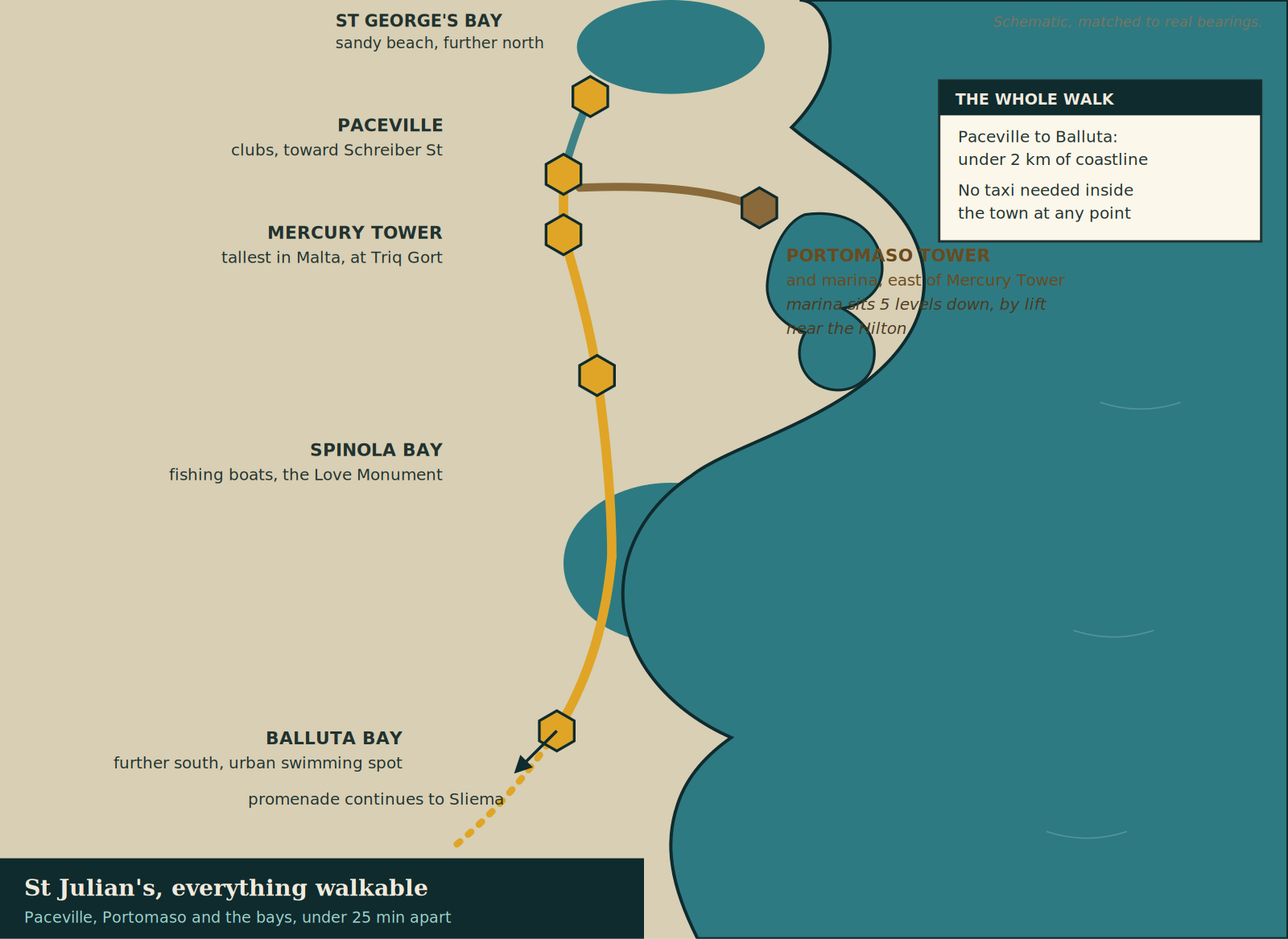
From Valletta: Taxi, 15 to 20 minutes; buses 12, 13, 14 or 21, roughly 25 minutes. From the airport: Taxi or rideshare (Bolt, Uber), roughly 20 to 30 minutes with no stops, the most convenient option. By bus, the TD2 Tallinja Direct route runs a direct service between the airport and St Julian’s, typically 20 to 40 minutes depending on traffic and time of day; standard express routes also connect via Sliema, though route numbers do change periodically, so check the Tallinja app or publictransport.com.mt for the current direct option before you travel. From Buġibba or St Paul’s Bay: Direct bus southward, approximately 30 to 40 minutes. Within the town: Walk everywhere. The entire usable stretch of San Ġiljan, from Paceville down to Portomaso, covers less than two kilometres of coastline. You won’t need a taxi within town at any point.
The best time to visit
St Julian’s is active year-round, which is one of its genuine advantages over smaller Maltese towns that go quiet in winter. That said, the experience changes significantly by season. Summer (June to August) is the most intense: hottest weather, biggest crowds, most vibrant nightlife, and the most active beach scene. Book accommodation well in advance. Spring and autumn (April to May, September to October) offer the best all-round experience. The weather is warm enough for swimming and outdoor activities, but the summer crowds have thinned. Restaurant tables are easier to get and the promenade is less hectic. Winter (November to March) is genuinely quiet compared to summer, but San Ġiljan never fully closes. The large expat and business community keeps restaurants, cafés and bars open and lively, and the promenade is beautiful in low winter light. If you want a peaceful, more authentic version of the town rather than the tourist version, this is when to come.
Frequently asked questions
Where is St Julian’s, Malta?
St Julian’s, known locally as San Ġiljan, is a coastal town on the north-east side of Malta, roughly 8 kilometres from the capital Valletta. It sits between Pembroke and Sliema along the shoreline and is one of the main tourist hubs on the island.
What is St Julian’s like?
St Julian’s is a lively coastal town known for its mix of restaurants, hotels, seaside walks and nightlife. During the day it has a relaxed Mediterranean feel, especially around Spinola Bay and Balluta Bay. In the evening, Paceville becomes the main entertainment area, making it one of the most active parts of Malta.
What is there to do in St Julian’s?
Walk the promenade toward Sliema, explore Spinola Bay and Portomaso Marina, swim at St George’s Bay or Balluta Bay, visit Mercury Tower and Anima Rooftop, experience Paceville’s nightlife, and work through the wide range of restaurants. It also works well as a base for exploring the rest of Malta.
Where should I eat in St Julian’s?
The town offers everything from waterfront seafood restaurants to Michelin-recognised fusion cooking and casual pizza by the slice. A few categories worth knowing: Mamachi and Blue Elephant for special occasions, KuYa for Michelin-listed value, and L’Antica Pizzeria da Michele at Balluta Bay for a genuine slice of Naples.
Is Rainforest Cafe in St Julian’s?
Yes. Rainforest Cafe is located on Bay Street in St Julian’s, near St George’s Bay, and is a popular jungle-themed restaurant especially well suited to families with children.
Is it safe to swim at Balluta Bay?
Usually, but check current water quality notices before you go. Balluta Bay has experienced periodic bathing advisories in recent years due to stormwater and sewage-related contamination, most recently confirmed lifted after testing by the Environmental Health Directorate. St George’s Bay nearby can be affected by similar issues, so check both before deciding where to swim.
How far is St Julian’s from Valletta?
About 8 kilometres. Travel takes around 15 to 25 minutes by taxi or 20 to 30 minutes by bus.
How do I get from Malta Airport to St Julian’s?
The most convenient option is taxi or rideshare, taking around 20 to 30 minutes with no stops. The TD2 Tallinja Direct bus also runs a direct route between the airport and St Julian’s; check the Tallinja app for current timetables and fares, since route numbers and schedules do change periodically.
Is St Julian’s the same as Paceville?
No. Paceville is a nightlife district within St Julian’s, while the town as a whole also includes Spinola Bay, Balluta Bay, Portomaso Marina and residential areas well beyond the club scene.
When is the St Julian’s feast?
The feast of San Ġiljan is held on the last Sunday of August. The highlight is the ġostra, a greased-pole competition suspended over Spinola Bay, alongside the Musketterija tradition of ceremonial gunfire and a full week of band parades and fireworks.
How long should I spend in St Julian’s?
A single day covers the promenade, Spinola Bay and a meal, but most visitors find the town rewards two or three days, enough time to swim, try several restaurants, see Paceville at night, and use it as a comfortable base for day trips to Valletta, Mdina, or Gozo and Comino. We’ve spent eight years living right here in San Ġiljan and we’re still finding things to appreciate. From the ancient fishing harbour of Spinola Bay to the sky-high drama of Anima Rooftop at Mercury Tower, from world-famous Neapolitan pizza eaten on a marina bench to Michelin-listed fusion cooking a five-minute walk away, St Julian’s holds more within its small borders than most places manage across an entire region. If you’re planning a trip to Malta and want a base that puts everything within reach, San Ġiljan is the answer.