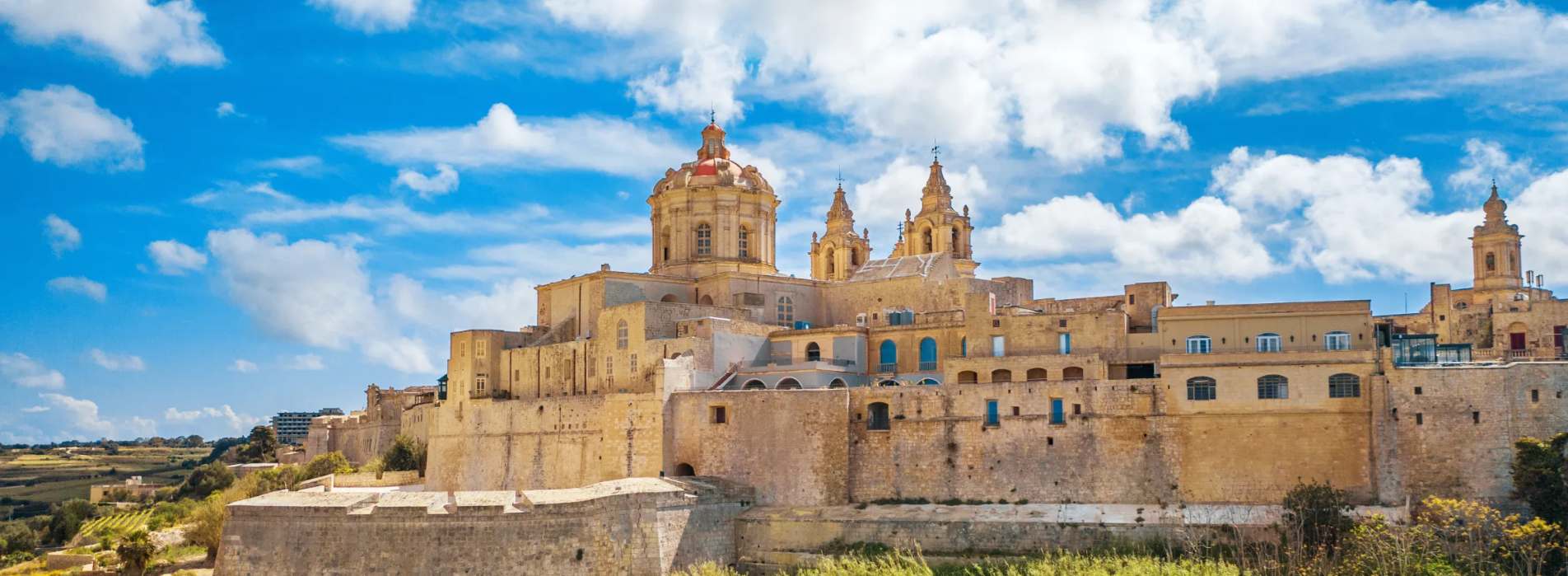
Most Mdina articles tell you it is old, quiet, and pretty. All true, and all useless for actually planning a visit. What they leave out is the stuff that makes people stay two hours instead of twenty minutes: that half the alleys you’ll walk through are straight out of Game of Thrones, that the “walled city” you’re standing in is only a third of the city that once stood here, and that the cathedral, the museum and the cake all have specific hours you can miss if you don’t check first. This guide covers all of it. History that actually explains what you’re looking at, the exact route to walk so you don’t backtrack, the Game of Thrones locations in the order you’ll reach them, opening hours, bus numbers, and the honest reason Mdina is worth more than the average visitor gives it.
A history that actually explains what you’re looking at
Mdina is not an old town that happens to have a wall around it. It was Malta’s capital for most of the island’s recorded history, and it used to be about three times the size it is now.
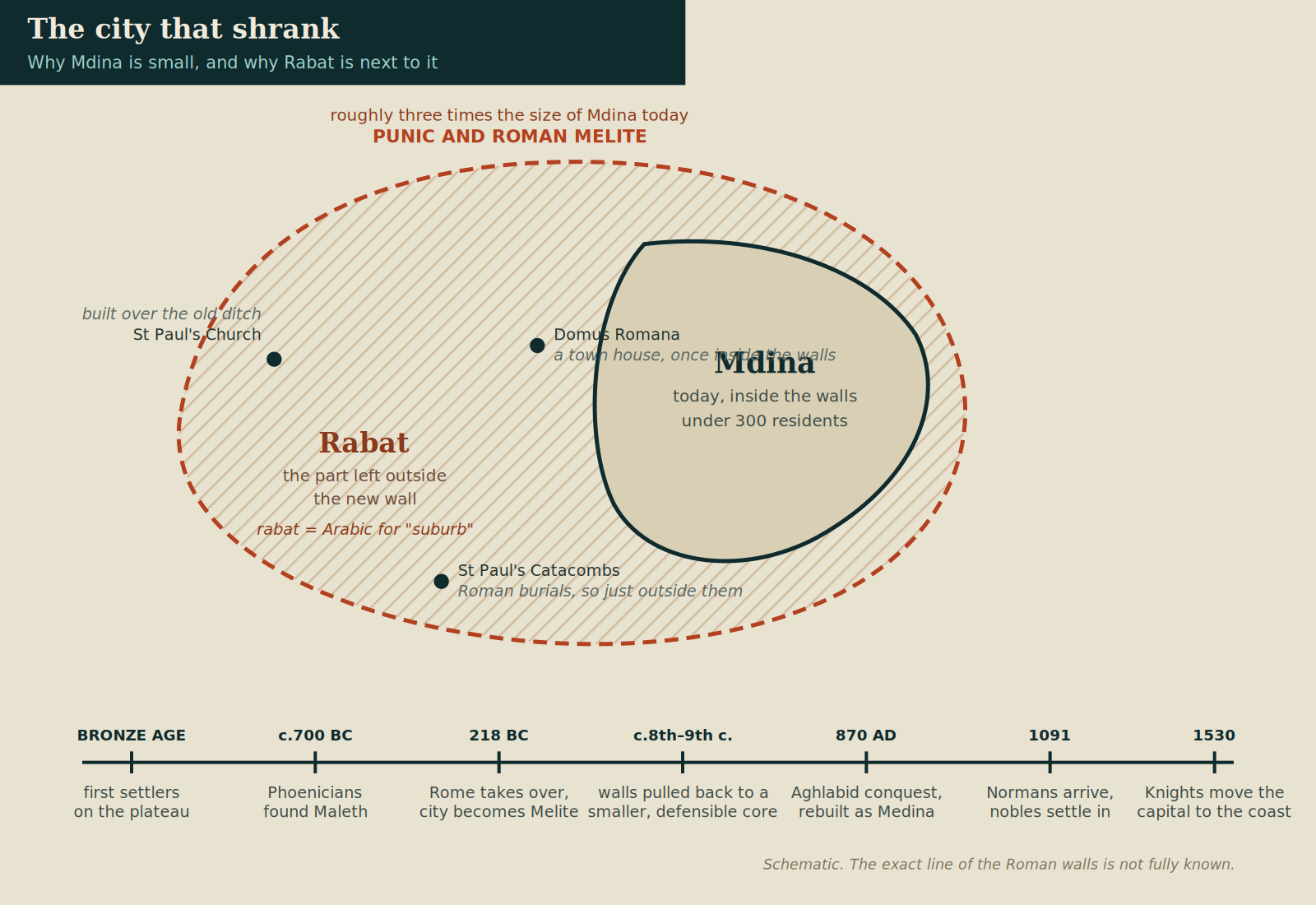
The story runs like this. Phoenician settlers founded a city called Maleth on this hilltop around the 8th century BC, drawn by the height, the defensible position, and the fact that it sits about as far from the coast as you can get on this small island, which mattered when your enemies arrived by ship. The Romans took over in 218 BC and renamed it Melite, expanding it into a proper city with a grid of streets, a forum, town houses and public baths. That Roman city is why St Paul’s shipwreck and stay on the island, recorded in the Acts of the Apostles, is traditionally placed here. Melite stayed large and open for centuries. Then, as the Roman Empire declined, the city was cut back to a smaller, more defensible core, a common move across the Mediterranean at the time. Historians still debate whether the Byzantines did this before the Arab conquest or the Arabs did it after, but the effect is not in dispute: walls that had enclosed an area three times the current size were pulled in tight, and everything left outside became a separate district. That leftover district needed a name, and it got a plain one. Rabat comes from the Arabic word for suburb. It is not a coincidence that Rabat and Mdina feel like two different towns that happen to touch. They used to be one town, and Rabat is what was left standing outside the new, smaller wall. The Arab period, from 870 AD, gave the city its current name: medina, Arabic for “city,” Maltese-ised into Mdina. It also gave the streets their winding, deliberately confusing layout, built to slow down anyone who made it past the walls. The Normans arrived in 1091, and under their rule and the centuries that followed, Mdina became the seat of Malta’s nobility, known formally as Città Notabile, the Notable City. This was the era that built most of what you actually see today: the fortifications, the noble houses, the narrow street plan dressed up in medieval and later Baroque stonework. The pivot point came in 1530. The Knights of St John arrived and, after the Great Siege of 1565 proved how exposed the island was, chose to build an entirely new fortified capital on the coast, one that could be defended by a navy. That city became Valletta. Mdina lost its administrative role, its population thinned out, and the noise moved to the harbour. What was left behind is exactly what gives the city its nickname today. The Silent City is not a marketing phrase. It is what happens to a capital once the government, the traffic and most of the people leave, and only around 300 residents remain inside the walls.
Why it actually feels different
Most towns get quiet because there’s nothing to see. Mdina is quiet because of a decision: cars are not allowed inside the walls except for residents. Combine that with narrow streets built specifically to disorient and slow down movement, and you get a place where sound just behaves differently than it does five minutes away in Rabat. Go deeper than the two or three streets near the main gate and the crowds thin out fast, even in August. Most visitors do a there-and-back loop from the entrance and never see the quieter half of the city.
Where to see it from: the views
Mdina sits on high ground, and the bastions along its northern and western edges are where that pays off. From here you get open countryside, scattered villages, and farmland running all the way to the coast, which is a genuinely different Malta from the packed harbours and beach towns most visitors spend their time in.
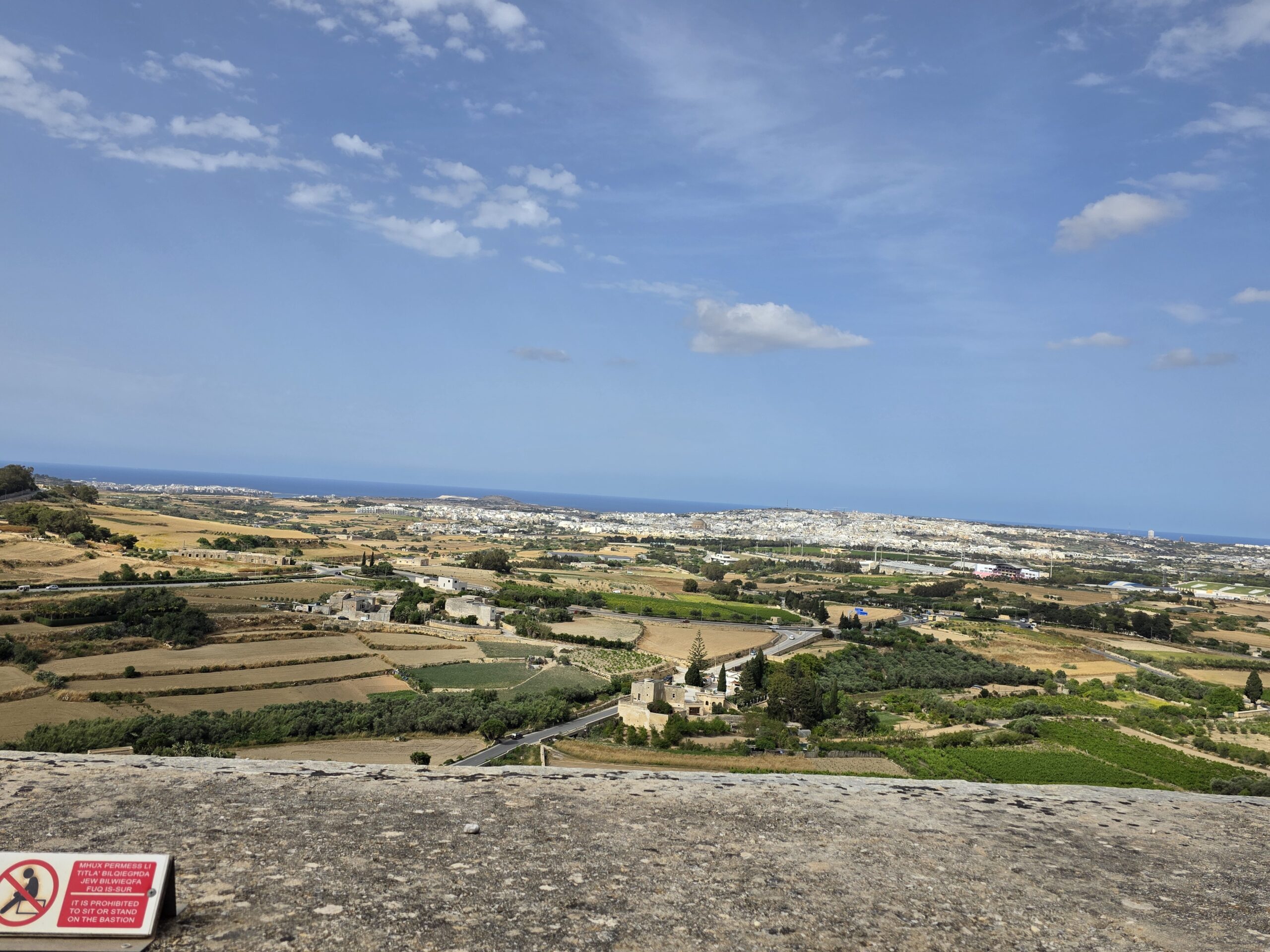
Sunset here is a quieter experience than the well-known show at Dingli Cliffs, but it has its own draw: you’re watching the light change over farmland and village rooftops rather than open sea, with the honey-coloured stone of the bastions themselves catching the last light.
Villegaignon Street, and the other alleys worth finding
Triq Villegaignon, or Villegaignon Street, is the spine of the city and its most photographed stretch: tall limestone walls on both sides, a straight symmetrical run, and a light that turns almost cinematic in the late afternoon.
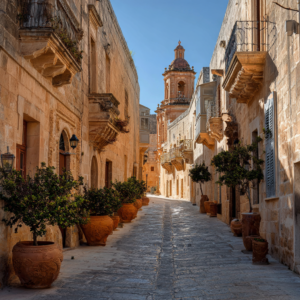
But the real character of Mdina lives off that main line. The side alleys are where you find the details that don’t make it into photos: worn stone doorsteps, ironwork balconies, doors painted in colours that have faded unevenly over decades, small courtyards glimpsed through half-open gates. There is no substitute for just turning down whatever looks quiet and seeing where it goes. In a city this size, you cannot really get lost. You will always hit a wall or a gate within a few minutes.
Mdina on screen: the Game of Thrones locations
If you watched Game of Thrones, you have already seen Mdina, whether you knew it or not. Season 1 used the city extensively as the exterior of King’s Landing, and walking through it today feels a little like wandering an old film set. The Main Gate is the most recognisable location in the city. It’s where Catelyn Stark and Ser Rodrik Cassel ride into King’s Landing in Season 1, Episode 3, “Lord Snow,” and it’s also where Ned and Catelyn share their final goodbye later in the same episode, neither of them knowing it’s the last time they’ll see each other. Walk further in and you reach Mesquita Square, a small piazza that appears repeatedly through the first season. It served as the exterior of Littlefinger’s brothel, and it’s also where Jaime Lannister and his men attack Ned Stark’s guards in Episode 5, “The Wolf and the Lion.” The square is barely two minutes from the Main Gate, which tells you how much of King’s Landing’s “sprawl” was actually one small corner of one small city. Beyond the two headline locations, general street scenes around Mdina were used repeatedly for King’s Landing’s background shots, including a section nicknamed the Street of Steel, seen in Episode 4 as Ned follows the trail of Jon Arryn’s final movements. If you’ve watched the show, expect a steady stream of small “wait, I recognise this” moments as you walk.
What to actually go inside for
St Paul’s Cathedral, on Villegaignon Street in the main square, is the obvious stop and earns it: a Baroque interior built after an earlier church on the same site was destroyed in the 1693 earthquake, with a cathedral museum attached that holds an engraving collection including work by Albrecht Dürer.
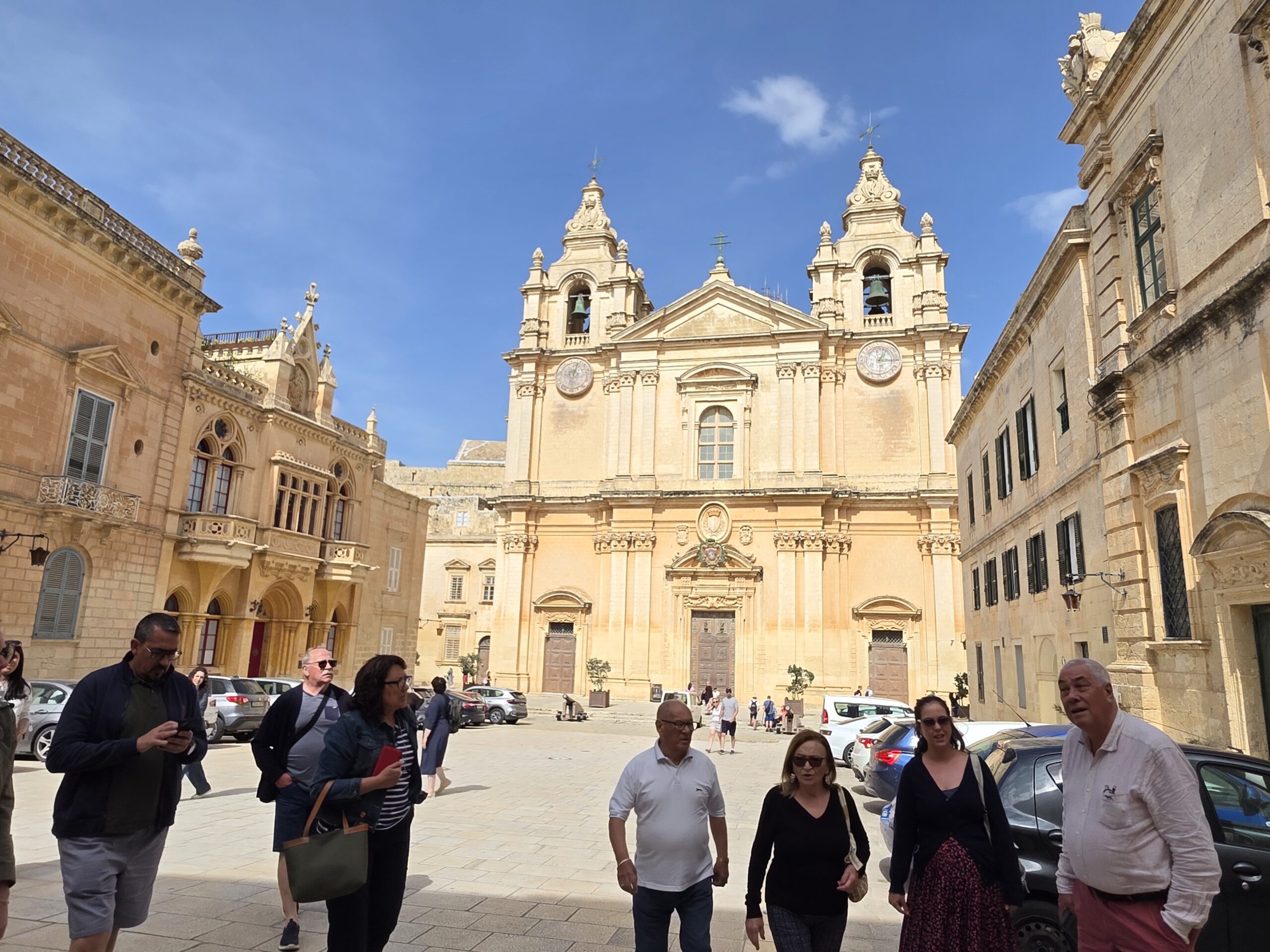
Opening hours: Monday to Saturday, 9:30am to 4:30pm, last entry 4:15pm. Closed to tourist visits on Sundays and during services, weddings and funerals. Combined cathedral and museum ticket is roughly €10. Hours and prices change, so check the cathedral’s own site before you go. Palazzo Falson, also on Villegaignon Street, is one of the oldest buildings in the city and one of the few places in Mdina where you genuinely feel like you’ve stepped into a lived-in noble house rather than a roped-off museum. It holds a private collection of furniture, armour, silverware and art assembled by the last owner, and the rooms are arranged the way he left them rather than staged for display.
Fontanella Tea Garden
If you have one food stop in Mdina, this is it. Fontanella sits on the bastions and is known island-wide for its cakes, chocolate cake and cheesecake in particular, but the real draw is the terrace: you’re eating dessert with the same countryside view you came to the bastions for in the first place. It gets busy, especially in the late afternoon when the sunset crowd starts arriving. It’s worth the wait, but if you’d rather not queue, aim for a mid-morning visit instead.
The horse carriage ride
At the Main Gate you’ll find traditional horse-drawn carriages, or karozzini, waiting for passengers. It’s an old-fashioned way to enter the city, and drivers typically narrate bits of history as they go, taking in parts of Mdina and sometimes continuing into neighbouring Rabat. Prices vary by route and duration and are generally negotiated directly with the driver, so agree the price and route before you get in. Even if you don’t ride, the carriages lined up at the gate are part of the atmosphere and worth a photo either way.
Suggested route: seven stops, no backtracking
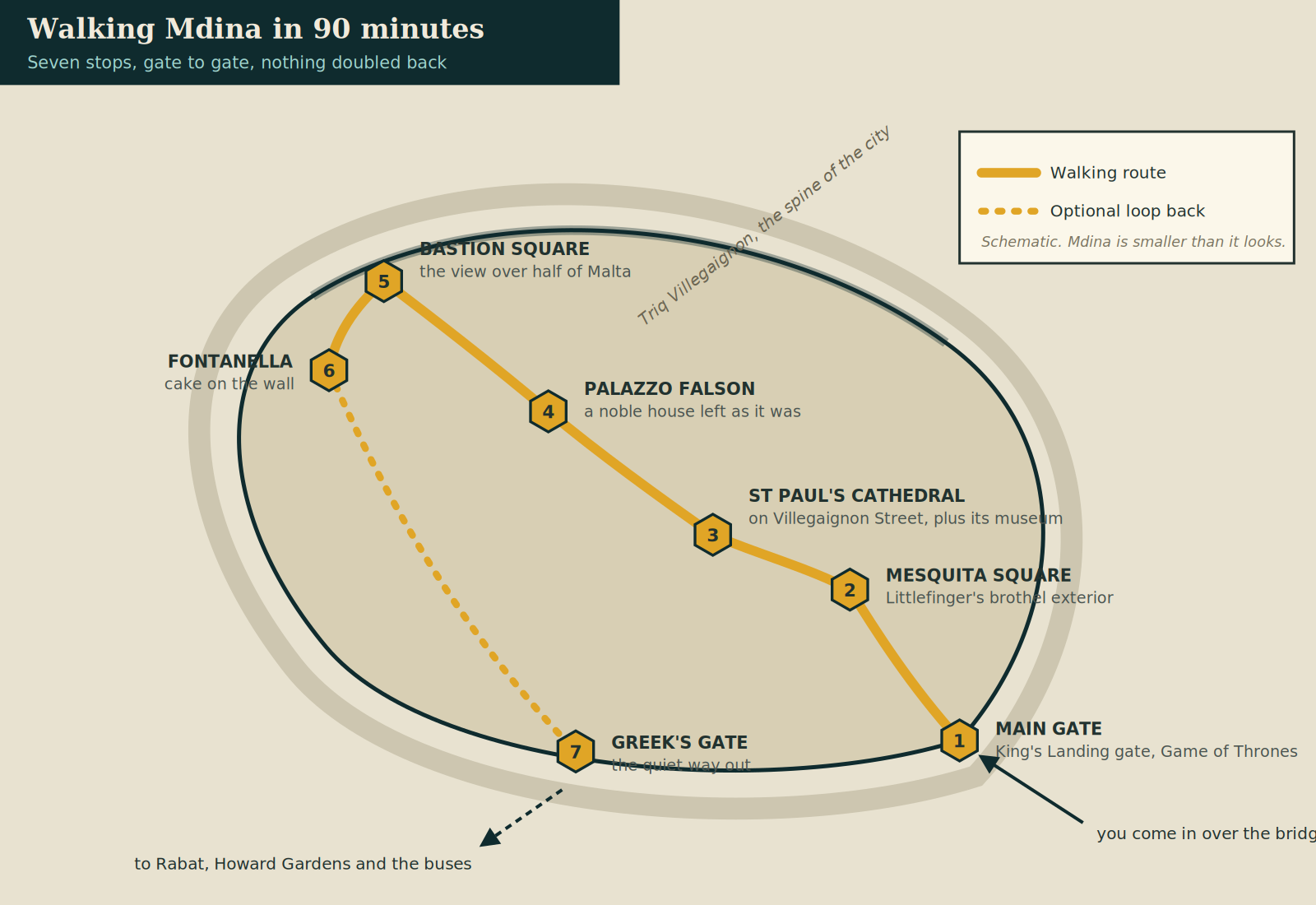
Mdina is small enough that a single loop covers almost everything worth seeing, without doubling back on yourself.
- Main Gate: start here. Look back at it once you’re through; this is the Game of Thrones King’s Landing shot.
- Mesquita Square: two minutes in, just off the main street.
- St Paul’s Cathedral: the centre of the city, on Villegaignon Street.
- Palazzo Falson: a couple of blocks further along the same street.
- Bastion Square: for the view over the countryside.
- Fontanella Tea Garden: right beside the bastions, for cake and the same view.
- Greek’s Gate: the quieter exit, heading down towards Rabat and Howard Gardens.
Walked without stopping, this loop takes about 20 minutes. Budget 90 minutes to two hours to actually go inside the cathedral and Palazzo Falson and sit down for cake.
Right next door: Rabat
It is not a separate day trip. It’s the other half of the same story, sitting immediately outside Mdina’s walls, and it has a completely different feel: everyday Maltese life, small shops, local cafés, actual traffic. The main reason to cross over is St Paul’s Catacombs, a network of underground Roman burial tunnels that gives you a completely different kind of history from Mdina’s streets above ground. Combining Mdina and Rabat, including the catacombs and a proper stop at Fontanella, makes a comfortable half-day plan.
Practical details
Getting there
By car. Driving in is the easiest option if you’re not relying on public transport. Cars are not allowed inside the walls except for residents, so you’ll park outside. There’s a public car park at the Mdina entrance and another at Il-Foss, the old ditch area. Parking attendants often expect a coin or two, so keep €1 and €2 coins handy. By bus. Routes 51, 52 and 53 run to Mdina and Rabat from Valletta, stopping just outside the main gate, with the journey taking roughly 30 to 40 minutes depending on traffic. From other parts of the island, you’ll typically connect through Valletta first. Malta Public Transport routes and timetables do change, so check publictransport.com.mt before you travel, particularly if you’re planning to stay for sunset and need an evening bus back. By taxi or rideshare. Bolt and eCabs both operate reliably across Malta. From Valletta, expect roughly 20 to 25 minutes.
Best time to visit
Morning gives you the calmest streets and the fewest people, ideal if quiet is the whole point of coming. Late afternoon into evening is the other sweet spot: the light softens, most day-trip groups leave, and Mdina slips back into something closer to how it must have felt a few centuries ago. Spring (March to May) and autumn (September to November) offer the most comfortable walking weather. Summer works well if you go early or late in the day, avoiding the flat midday heat on stone streets with little shade. Winter is quieter still and genuinely pleasant to walk, just pack a layer for the wind on the bastions.
How much time to allow
Two to three hours covers the core city at an unhurried pace. Add Rabat, the catacombs, and a proper sit-down at Fontanella and you’re looking at half a day.
What makes it worth the trip
Mdina doesn’t work as a checklist of attractions. Nothing dramatic happens here, no single sight demands forty minutes of your itinerary. What it offers instead is a shift in pace: streets with no traffic, stone that’s been standing since before most European capitals existed, and views that show you a completely different Malta from the beaches and harbour towns. Walk it slowly, stop for cake on the bastions, and if you know Game of Thrones, keep an eye out. You’ll recognise more of it than you expect.
Frequently asked questions
How long do you need to visit Mdina?
Two to three hours covers the main sights at a relaxed pace: the Main Gate, Villegaignon Street, St Paul’s Cathedral, and the bastions. Add Rabat and St Paul’s Catacombs next door and plan for half a day.
Is Mdina free to visit?
Yes, walking around the city itself is free. The Main Gate, Villegaignon Street, Mesquita Square and the bastions cost nothing to see. Individual sites charge separately: St Paul’s Cathedral and its museum charge a combined entry fee of around €10, and Palazzo Falson has its own separate ticket.
What are the Mdina Cathedral opening hours?
St Paul’s Cathedral is open Monday to Saturday, 9:30am to 4:30pm, with the last ticket sold at 4:15pm. It is generally closed to tourist visits on Sundays and may restrict access during weddings, funerals or other services. Confirm current hours on the cathedral’s official site before visiting, since these can change around religious holidays.
How do you get to Mdina from Valletta?
Bus routes 51, 52 and 53 run from Valletta to Mdina and Rabat, taking roughly 30 to 40 minutes depending on traffic. By car or taxi, the drive takes about 20 to 25 minutes. Cars cannot enter the walled city itself except for residents, so you’ll park just outside.
Which Game of Thrones scenes were filmed in Mdina?
Mdina’s Main Gate appears in Season 1, Episode 3, “Lord Snow,” as Catelyn Stark rides into King’s Landing, and again for the final farewell between Ned and Catelyn. Mesquita Square, a short walk inside the gate, served as the exterior of Littlefinger’s brothel and appears again in Episode 5 during the attack on Ned’s guards. General street scenes around the city were also used for King’s Landing background shots throughout the first season.
Why is Mdina called the Silent City?
Mdina lost its role as Malta’s capital when the Knights of St John built Valletta on the coast in the 1500s. As the administration and population moved out, the city grew quiet, and today fewer than 300 people live inside its walls. Cars are also restricted inside the city, which keeps it genuinely quiet rather than just historically branded that way.
Is Mdina the same as Rabat?
No, though they were once one city. The ancient city of Melite was roughly three times the size of present-day Mdina and covered much of what is now Rabat. When the walls were pulled back to a smaller, more defensible core, the area left outside became a separate district known as Rabat, from the Arabic word for suburb. Today they sit side by side with two distinct atmospheres: Mdina historic and quiet, Rabat local and everyday.
Can you drive into Mdina?
Only residents can drive inside the walled city. Visitors park outside, either at the public car park near the Mdina entrance or at Il-Foss, and walk in through one of the gates. Keep small coins for parking attendants.
What is the best time of day to visit Mdina?
Early morning gives you the fewest people and the calmest streets. Late afternoon into early evening is also excellent, since the light softens and most day-trip groups have left by then. Midday in summer is the busiest and hottest time, with little shade on the stone streets.
Is Mdina worth visiting if I only have one day in Malta?
Yes, though pair it with something nearby rather than treating it as a standalone destination. Combining Mdina with Rabat and St Paul’s Catacombs makes a strong half-day, or pair it with Dingli Cliffs for sunset if you have a car, since the two are only a short drive apart. Mdina rewards slowness more than almost anywhere else in Malta. Walk the loop, go inside the cathedral, sit down for cake on the bastions, and if a street looks quiet and unremarkable, turn down it anyway. That’s usually where the city actually is.