The Church With Two Clocks – And One That’s Always Wrong
An old island legend, a very confused devil, and a tradition that outlived its own explanation.
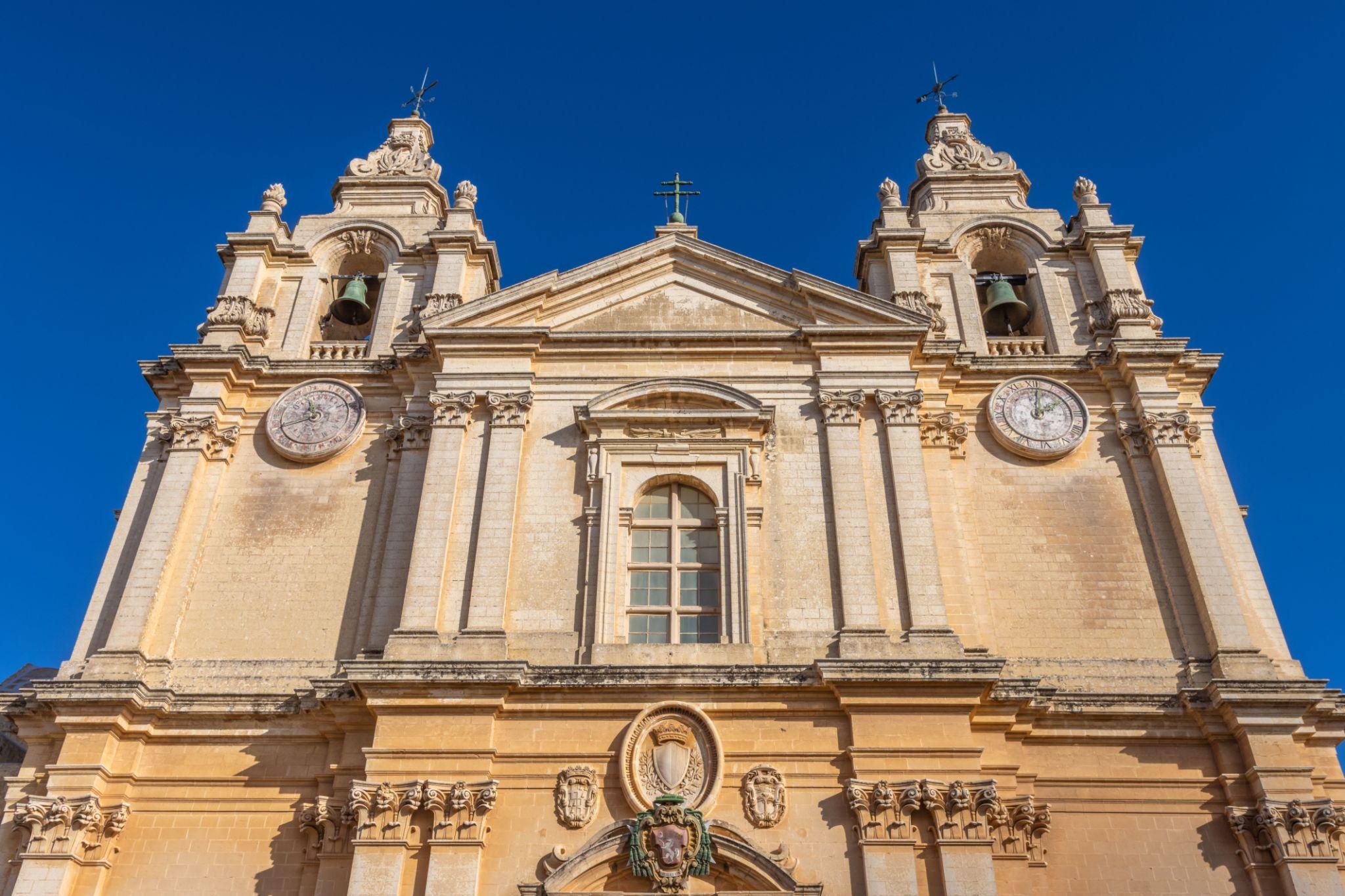
You’re walking through a Maltese village. You glance up at the church tower – and something feels off. There are two clocks on the facade. One shows the correct time. The other is completely wrong. Off by ten minutes. Sometimes thirty.
You check your phone. You check again. You’re not imagining it.
And then you notice something even stranger – this isn’t just one church. It’s happening all over Malta. Village after village, the same thing. Two clocks. Two different times. One right, one wrong.
And then a local smiles at you and says, almost casually: “The wrong one is for the devil.”
According to old Maltese folklore, one clock was deliberately set to the wrong time – so the devil would miss Mass and fail to tempt worshippers during the service. Keep him confused, keep him away. Simple as that.
It sounds like a medieval joke. But this belief became deeply woven into village life across the island. Many older Maltese still repeat the story today, with a quiet smile – half serious, half playful. And honestly, that mixture feels very Maltese.
A country built around church life
To understand why this tradition exists, you need to understand what churches actually meant in Malta. They weren’t just religious buildings. For centuries, the church bells set the rhythm of daily life. Feast days mattered more than national holidays. Parish identity ran deeper than the name of the town itself.
The church was a clock, a meeting point, a social center, and the tallest symbol of local pride – all at once. It was where people gathered not just to pray, but to meet neighbors, mark birthdays, mourn losses, and celebrate weddings. The whole rhythm of community life moved around it.
Even today, you can spot massive church domes looming over entire village skylines in places like Mosta, Żebbuġ, Qormi, and Naxxar. These domes aren’t modest. They’re enormous – intentionally built to dominate the landscape, to remind everyone in the village exactly where the center of life was.
These aren’t just pretty buildings. They’re the emotional heart of entire communities. Which is exactly why the story of the two clocks stuck for so long.
But was it really about the devil?
Historians are more measured about all this. The “confusing the devil” explanation may have been symbolic – or it may have slowly grown around a much more practical reality that people later dressed up in folklore.
A few other theories exist.
- Symmetry before function – Many churches were built with two towers purely for architectural balance. A single clock tower would have looked lopsided. Two towers looked complete, dignified, proportional. If one clock mechanism failed or wasn’t maintained, the facade still looked exactly as intended.
- Clocks used to drift – Mechanical clocks in earlier centuries were genuinely unreliable. Keeping two clocks perfectly in sync, especially in small rural villages without skilled clockmakers nearby, was difficult and expensive. A drifting clock wasn’t always negligence – sometimes it was simply the reality of the technology available.
- The legend grew stronger than the fact – Once the devil story spread and became part of local identity, it started absorbing everything around it. Even practical problems got a supernatural explanation. And a good story, once it takes root in a community, often outlives the practical truth behind it.
Not every church does it
An important detail that many articles miss: not every church in Malta intentionally shows two different times.
Sometimes one clock is simply broken, restoration work is unfinished, or the timing mechanisms have drifted naturally over years of neglect. There is no hidden intention behind every mismatched clock you see.
But because the “devil confusion” legend became so famous, people now associate almost every mismatched church clock with the story – whether it was deliberate or not.
And in a way, that makes the whole tradition even more fascinating. The myth became stronger than the original reason. It grew bigger than the facts. It started explaining things it was never meant to explain.
One of Malta’s most charming little mysteries
For locals, the clocks are almost invisible now – just another part of village life, as unremarkable as the stone walls or the festa banners strung between balconies.
But for outsiders, they create one of those perfect travel moments. You notice something strange. You ask a question. And suddenly you find yourself inside a story that has been quietly running for generations – one that says something real about how deeply faith, superstition, and community are still tangled together on this island.
And maybe that’s why people remember the church clocks long after they leave Malta.
Because they’re not just clocks.
They’re tiny reminders that on this island, some old stories simply refused to be forgotten.