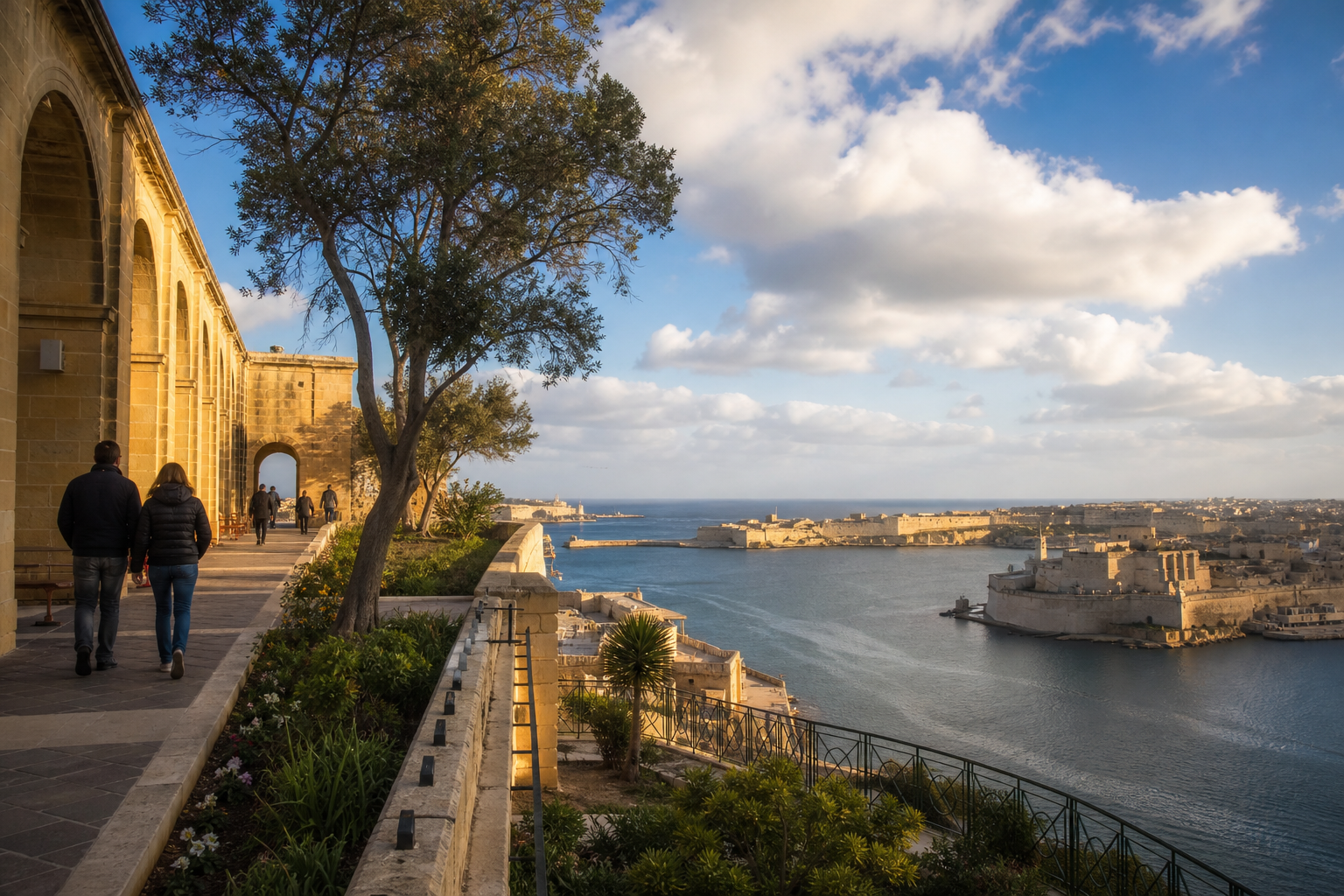
Yes, Malta is worth visiting in winter, as long as you come for the right reasons. You get mild days, quiet historic sites, lower prices and a festive mood in December. You do not get beach weather. If you want sightseeing, food, walking and a break from the cold of northern Europe, winter is a very good time. If you want to swim and lie on the sand, wait for late spring.
What is the weather really like in winter?
Winter in Malta runs roughly from December to February, with March already feeling like spring. According to the UK Met Office climate averages for Malta, daytime highs are about 17°C in December, about 16°C in January and about 15 to 16°C in February. Night-time lows fall to around 9 to 11°C. March warms up again to a high of about 17°C with around 7 hours of sun a day.
Rain is the main thing to plan for. The same averages show roughly 80 to 90 mm of rain per month from December to February, falling to about 41 mm in March. Sunshine is around 5 hours a day in December and January and about 6 in February. Rain usually comes in short, heavy spells rather than all-day drizzle, so you often get a bright spell afterwards.
Wind matters as much as temperature. Malta is small and open, so a cold northwest wind can make a 15°C day feel much colder on the bastions or the coast. Malta International Airport’s round-up of the 2017/18 winter, for example, recorded a strongest gust of 47 knots in early January and noted that January was the windiest month of that season. That was one winter, not a rule, but it shows why a windproof layer is more useful than a thick coat.
Weather changes quickly in winter, so check the Malta this week page for wind and sea conditions a day or two before you travel, especially before ferry trips or coastal walks.
Can you swim in Malta in winter?
Most visitors will not want to. The Met Office averages give a sea temperature of about 18°C in December, 16°C in January and 15°C in February. A few hardy locals swim all year, but for most people this is too cold, and rough seas can close beaches or make them unsafe. If swimming matters to you, read our guide to the best beaches in Malta for swimming in October and plan a trip in autumn or late spring instead. Winter beach days are better for walks, photos and a coffee nearby. Browse our beaches page for ideas.
Why winter is a good time to visit
Fewer crowds at the big sites
Valletta’s streets, Mdina’s lanes and the main heritage sites are far calmer than in summer. You can take your time, get closer to the displays and walk the cities without the midday heat. Our heritage page lists the main sites, and the ancient temples guide is a good place to start for the prehistoric sites, which are older than the pyramids.
Cooler weather for walking
Walking Valletta, the Three Cities or the Dingli cliffs is much more pleasant at 15 to 17°C than at 35°C. Bring layers, because shade and wind can make it feel cool, and a waterproof for the showers.
Lower prices and easier booking
Hotels and flights are generally cheaper outside summer, and restaurants are easier to book. Christmas and New Year are the busy exceptions, so book early if you plan to travel then. Prices change by date and provider, so compare before you book.
Festive atmosphere
Valletta decorates its streets for Christmas, and there are local markets and cribs across the islands. Our Malta in December guide and our Christmas in Malta guide cover the traditions and events. For the night of 31 December, see our page on New Year’s Eve in Valletta. The programme may still change, so check official announcements.
What to do on rainy days
Winter is the season for indoor Malta. Good rainy-day options include:
- Museums and heritage sites. Many are indoors or partly covered. A multi-site ticket can save money if you plan to visit several, see our Heritage Malta Multisite Pass guide.
- Underground and temple sites. The Hypogeum is an underground prehistoric site, and visits are limited and need advance booking, so plan ahead. In Gozo, the Ggantija Temples are a good dry-weather outing.
- Food stops. Winter suits a long lunch. Read our Maltese food guide for dishes to try, and keep pastizzi for a quick warm snack.
- Churches and old streets. Valletta and Mdina are rewarding even in grey weather.
Events and holidays to know about
Several public holidays fall in the winter months, and shops, sites and transport can run to holiday hours. For 2026 to 2027 these include 8 December (Immaculate Conception), 25 December (Christmas Day), 1 January (New Year’s Day), 10 February (Feast of St Paul’s Shipwreck) and 19 March (Feast of St Joseph). See our Malta public holidays page for the full list.
Carnival is another winter highlight. It is usually held in February, with parades in Valletta and a well-known, more spontaneous version in Nadur on Gozo. Exact dates and programmes are announced by the organisers, so check Visit Malta before you plan around them. Our events page shows what is on.
What to pack for Malta in winter
- A windproof and waterproof jacket.
- Layers: T-shirts, a jumper and a light fleece.
- Comfortable shoes with good grip. Valletta’s limestone steps and streets are slippery when wet.
- A small umbrella, though it can be hard to use in strong wind.
- A scarf or hat for evenings and ferry crossings.
- Swimwear only if you want to try a hotel pool, as not all pools are heated.
Also check whether your accommodation has heating. Many Maltese homes and some older hotels are built for hot summers, so winter indoors can feel cool and damp.
Who should visit in winter, and who should not
Winter suits couples, culture lovers, walkers, photographers, history fans and anyone who wants a short, easy escape. It is less suited to families who expect beach days, divers who want warm water, or anyone who hates wind and rain. Many outdoor boat trips run less often or not at all, and rough seas can affect ferries, so keep your plans flexible.
FAQ
Is Malta warm in winter?
It is mild rather than warm. Daytime highs are usually around 15 to 17°C, with cooler nights. It is much milder than most of northern Europe but cool enough for a jacket.
Which winter month is best?
December is the most festive and has the warmest sea and air of the winter months. January and February are the coolest. March is drier and brighter, with about 41 mm of average rain. Pick based on whether you want Christmas lights or better weather.
Are tourist sites open in winter?
Most main sites stay open, though hours can be shorter and some places close on public holidays. Prices and opening times change, so check the official site before you go.
Do I need to book in advance?
For Christmas, New Year and popular sites such as the Hypogeum, yes. At other times it is usually easier to find rooms and tables than in summer.
Is Malta good for a winter city break?
Yes. Valletta, Mdina, the Three Cities and Gozo are all easy to do in a few days, and our complete Malta travel guide for first-time visitors will help you plan.
In short
Malta in winter is mild, quiet and good value, with plenty of culture, food and walking. It is not a beach holiday. Pack layers and a windproof jacket, keep a rainy-day plan, and check the forecast on the day. Prices, times and rules change, so check the official site before you go.
Planning further ahead? Read about Malta in November or see Malta in December.