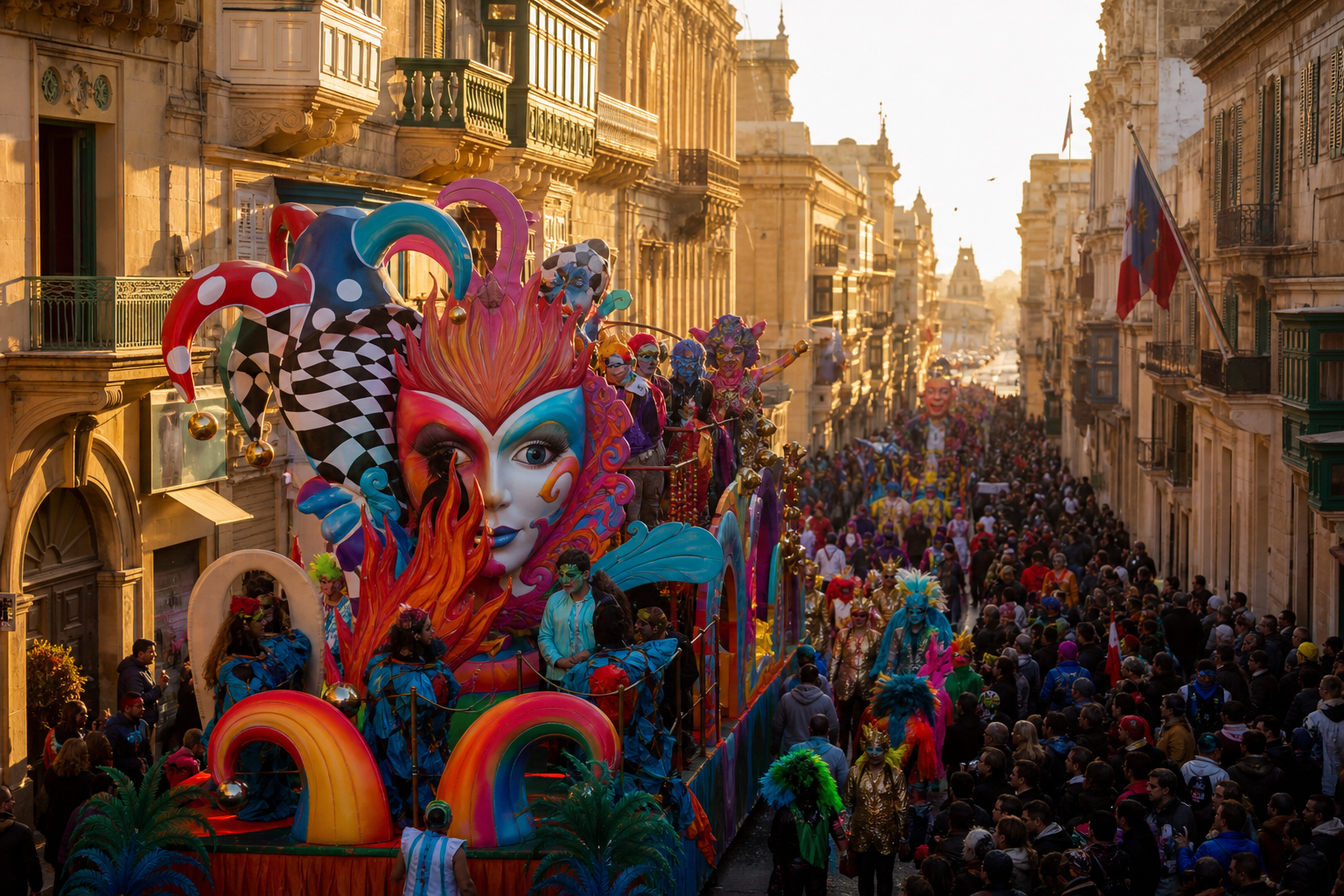
Malta Carnival (Karnival ta’ Malta) is the island’s loudest, brightest party of the year, and for 2027 it has been announced for 5 to 9 February 2027, ending just before Ash Wednesday on 10 February. The main show is in Valletta and Floriana, with a darker, wilder version in Nadur on Gozo. Watching is free. This guide explains where to go, what to expect, and how to plan around it. Dates come from the Carnival Malta announcement as reported by local media, so please confirm the final programme closer to the time.
Malta Carnival 2027 at a glance
- When: announced as 5 to 9 February 2027 (Friday to Tuesday), before Lent starts on Ash Wednesday, 10 February.
- Main venues: Valletta and Floriana for the official parades, plus smaller carnivals in other towns and villages.
- Gozo: Victoria has an organised carnival, and Nadur has a famous spontaneous one after dark.
- Cost: watching the street parades is free. Some indoor events, such as balls, may be ticketed.
- Weather: cool, around 15 to 16 degrees in the day, so dress in layers.
A short history of Carnival in Malta
Carnival here is almost 500 years old. It grew in the time of the Knights of St John, and many sources link its rise to the 1530s, when Grand Master Piero de Ponte led the Order. The name comes from the Italian “carne vale”, often explained as “meat is allowed”, because the party came just before the long fast of Lent.
The first celebrations took place in Birgu, one of the Three Cities, with games, pageants and tournaments. Later Grand Masters tried to limit the excess, and there were bans on certain masks and costumes. From the 1920s the celebration centred on Valletta, which is why the capital is the main stage today.
What to expect in Valletta and Floriana
The official programme is a family-friendly street party. Expect large, colourful floats, marching bands, dance groups in costume and plenty of children dressed up. Floats are built over months by local teams, and the star of the show is the King of Carnival float, which leads the parades.
The streets around Valletta get busy, so arrive early for a good view, and keep in mind that some roads close during the parades. The exact timetable for 2027 was not published when I checked, so look at the official Carnival Malta page and our events page nearer the date.
Tips for the Valletta parades
- Get there at least an hour early if you want a spot with a clear view.
- Use public transport or park outside the city, as the centre is crowded.
- Keep an eye on your phone and bag in dense crowds.
- Bring a light waterproof, as February showers can arrive quickly.
Nadur Carnival on Gozo
Nadur is a different experience. It is a spontaneous, late-night street carnival where locals walk the village in home-made costumes. The mood is darker and more satirical, with ghoulish outfits, cross-dressing and jokes about public figures. It is mostly aimed at teenagers and adults, and it can be loud and rowdy. Families with young children usually prefer the daytime events in Valletta or Victoria.
If you go, plan how you will get back. Ferries and buses are limited late at night, so many people stay on Gozo overnight. Read our Gozo guide for ideas on what to see during the day, and book accommodation early.
Other carnivals and traditions
Some other villages hold their own smaller carnivals, and there are children’s competitions and costume events in different towns during the week. Għaxaq is known for a spontaneous carnival with masks and old-fashioned clothing. A summer carnival is also held in some localities, usually in August.
Carnival also has its food. The star is the prinjolata, a tall sweet dessert made from sponge, biscuits, almonds, citrus, cream and pine nuts. You will also see perlini, sugar-coated almonds. For more on what to eat, see our Maltese food guide.
Old customs that still survive
Some Carnival traditions go back centuries. One is the Qarċilla, a mock satirical wedding performed for laughs, which is still staged today. Another is the folk dance il-Maltija, danced in traditional style by groups during the celebrations.
Carnival has also always been linked with rules. In the 1600s the Knights banned women from wearing masks, and devil-themed costumes were forbidden at balls. Local sources say the first decorated floats appeared in the 1700s, when the public decorated carts that followed the Grand Master’s carriage. In the 20th century a carnival committee set up categories and prizes for floats and dance groups, which is why the modern parades feel so organised.
Today’s floats often use big figures, bright paint and music, and teams compete for prizes in different categories. Many locals work on their entries for months, so the effort you see on the street is real.
A simple Carnival weekend plan
If you only have a few days, keep it relaxed. On Friday evening, arrive and walk around Valletta to see the decorations and enjoy dinner. On Saturday and Sunday, watch the main parades in Valletta in the afternoon, then have a slow coffee and a sweet in one of the old streets. If you want to see Nadur, take the ferry to Gozo for a night out and stay over. On Monday or Tuesday, finish with a quiet visit to a museum or the heritage sites, as winter opening hours are shorter, so check times first.
Everything above depends on the official programme, so treat it as an outline and adjust once the parade routes and times are published.
Planning your trip around Carnival
February is one of the quietest months for tourism, but Carnival week is the exception. Hotels in and near Valletta fill up, so book early and choose free cancellation where you can. If you want a calmer trip, come just before or after the festival week.
Also note that 10 February is a public holiday in Malta for the feast of St Paul’s Shipwreck, so some shops and sites may close. See our Malta public holidays page for the list.
What to pack
Days are mild and nights are cold. Pack warm layers, a light rain jacket and comfortable shoes with good grip, because limestone streets get slippery when wet. Sea temperatures are low in February, so this is not a beach trip. For the bigger picture, read is Malta worth visiting in winter and our Malta in January guide for winter planning.
Check conditions a few days before you travel at Malta this week, where we share weather and what is on.
Frequently asked questions
When is Malta Carnival in 2027?
It has been announced for 5 to 9 February 2027, just before Ash Wednesday on 10 February. Dates change each year with Easter, so always confirm the final programme before booking.
Is Malta Carnival free?
Watching the street parades in Valletta and the village events is free. Some indoor parties, balls or competitions may need tickets, so check each event.
Is Carnival suitable for children?
Yes, the Valletta parades are family-friendly, with floats, music and many children in costume. Nadur on Gozo is more adult in tone and busiest at night, so it is better for older teens and adults.
Is it worth visiting Malta in February just for Carnival?
If you like local culture, yes. You will see an old tradition up close, with lower travel prices than in summer. Just plan for cool weather and book early.
Summary
Malta Carnival 2027 is a colourful, free, local celebration in the cold season. Choose Valletta for family fun and daytime floats, or Nadur for a wild night out. Book early, pack layers and check the official programme once it is out.
Planning further ahead? Have a look at Christmas in Malta and our complete Malta travel guide. Dates and programmes change, so check the official Carnival Malta and Visit Malta websites before you go.