Malta is tiny, but it holds more history per square kilometre than almost anywhere in Europe. Temples older than the pyramids, an underground burial complex carved by hand 5,000 years ago, forts that survived the Great Siege, palaces of the Knights and museums packed with treasures you won’t see anywhere else. And a huge part of all this is looked after by one organisation: Heritage Malta.
If you love history, or you just want to understand the island beyond its beaches, this guide covers every major Heritage Malta museum and site, where they are, what makes each one special and how to plan your visits without wasting time or money.
What Is Heritage Malta?
Heritage Malta is the national agency responsible for museums, conservation and cultural heritage in Malta. It was set up in 2002 and today manages a long list of museums, prehistoric temples, catacombs, forts and historic buildings across Malta and Gozo. Besides running the sites, its teams work on restoration, conservation and research, and they regularly organise exhibitions, special openings and events.
For visitors, this is great news. It means most of the island’s top historic attractions share one official website, one booking system and one ticket that can get you into many of them: the Multisite Pass.
Before You Go: 5 Things Worth Knowing
- Book the Hypogeum early. The Ħal Saflieni Hypogeum has strict daily visitor limits to protect it, and tickets often sell out weeks or even months ahead. If it’s on your list, book it before anything else.
- Consider the Multisite Pass. It covers entry to a long list of Heritage Malta museums and sites in Malta and Gozo and is valid for 30 days from first use. Prices depend on visitor type. It does not include the Hypogeum or Valletta Underground, which need separate tickets.
- Opening days change with the seasons. Some sites open daily, others only on certain days, and a few are closed for restoration at any given time. Always check the current hours on the official Heritage Malta website before you set off.
- Closed on some holidays. Heritage Malta sites are generally closed on 1st January, Good Friday and 24th, 25th and 31st December.
- Buy tickets officially. Book through Heritage Malta’s own website or at the site entrance. It’s the only way to be sure your ticket is valid.
Valletta: Museums in the Capital
Valletta is a UNESCO World Heritage city in its own right, and several of Heritage Malta’s most important museums are within a short walk of each other. You can easily see two or three in a day.
National Museum of Archaeology
Housed in the Auberge de Provence on Republic Street, this is the best place to understand Malta’s prehistoric story before visiting the temples. The highlight for most people is the collection of Neolithic finds, including the famous “Sleeping Lady” found in the Hypogeum and the curvy stone figures often called the “fat ladies” of Malta. Seeing them up close makes the temple sites far more meaningful.
MUŻA, the National Community Art Museum
MUŻA sits inside the Auberge d’Italie on Merchants Street. It’s a modern take on an art museum, built around the idea that art belongs to the community. You’ll find Maltese and European art spanning several centuries, presented in a way that tells stories rather than just hanging paintings on walls.
The Grand Master’s Palace
On St George’s Square, the Grand Master’s Palace was the seat of power of the Knights of St John and later of the British governors. Its state rooms, painted corridors and the famous Palace Armoury, one of the largest collections of its kind still in its original building, give you a real sense of how the Knights lived and ruled.
Fort St Elmo and the National War Museum
At the tip of the Valletta peninsula, Fort St Elmo took the full force of the Ottoman attack during the Great Siege of 1565. Today it houses the National War Museum, which covers Malta’s military history from prehistoric times to the Second World War. One of its most moving exhibits is the George Cross, awarded to the people of Malta for their courage during the Second World War. Read our full guide to Fort St Elmo and the National War Museum.
Fortress Builders Interpretation Centre
Ever wondered how Malta’s enormous bastions were actually built? This centre explains the engineering behind the island’s fortifications with models and interactive displays. It’s a short visit, but it changes how you look at every wall in Valletta afterwards.
Birgu and the Three Cities
Across the Grand Harbour, Birgu (also known as Vittoriosa) was the Knights’ first home in Malta. Take the ferry from Valletta for the best views on the way.
Fort St Angelo
Fort St Angelo was the Knights’ headquarters during the Great Siege, and it’s one of the most important historic buildings in the country. Walking its ramparts, with Valletta across the water and the harbour below, is one of the best experiences in Malta. Good timing tip: it’s lovely in the late afternoon light. Read our full guide to Fort St Angelo.
The Inquisitor’s Palace
This palace in the heart of Birgu was home to the Roman Inquisition in Malta for more than two centuries. It’s one of very few palaces of its kind that you can still visit anywhere in the world, with its courtrooms, prison cells and the Inquisitor’s private rooms. It’s fascinating, a little eerie and well worth an hour.
Malta Maritime Museum
Set in the former British naval bakery on the Birgu waterfront, the Maritime Museum tells the story of Malta’s deep connection with the sea. It has been undergoing a major restoration, so check whether it’s open before planning your visit around it.
Visiting in October? Don’t miss Birgu by Candlelight, when the whole city glows under thousands of candles.
The Prehistoric Temples and Underground Sites
This is where Malta becomes truly unique. The island’s megalithic temples were built thousands of years ago, and several of them are recognised by UNESCO as World Heritage Sites. Read more in our guide to UNESCO sites in Malta.
Ħal Saflieni Hypogeum
The Hypogeum in Paola is an underground complex of chambers and passages carved into the rock over three levels. It was used as a burial place and sanctuary, and there is nothing else quite like it anywhere in the world. Visits are in small groups with strict numbers, which is exactly why it’s so special and why you must book far in advance. We’ve written a full guide on how to visit the Ħal Saflieni Hypogeum.
Tarxien Temples
Just a few minutes’ walk from the Hypogeum, the Tarxien Temples are known for their decorated stone blocks with spirals and carved animals. It’s easy to combine both on the same morning.
Ħaġar Qim and Mnajdra
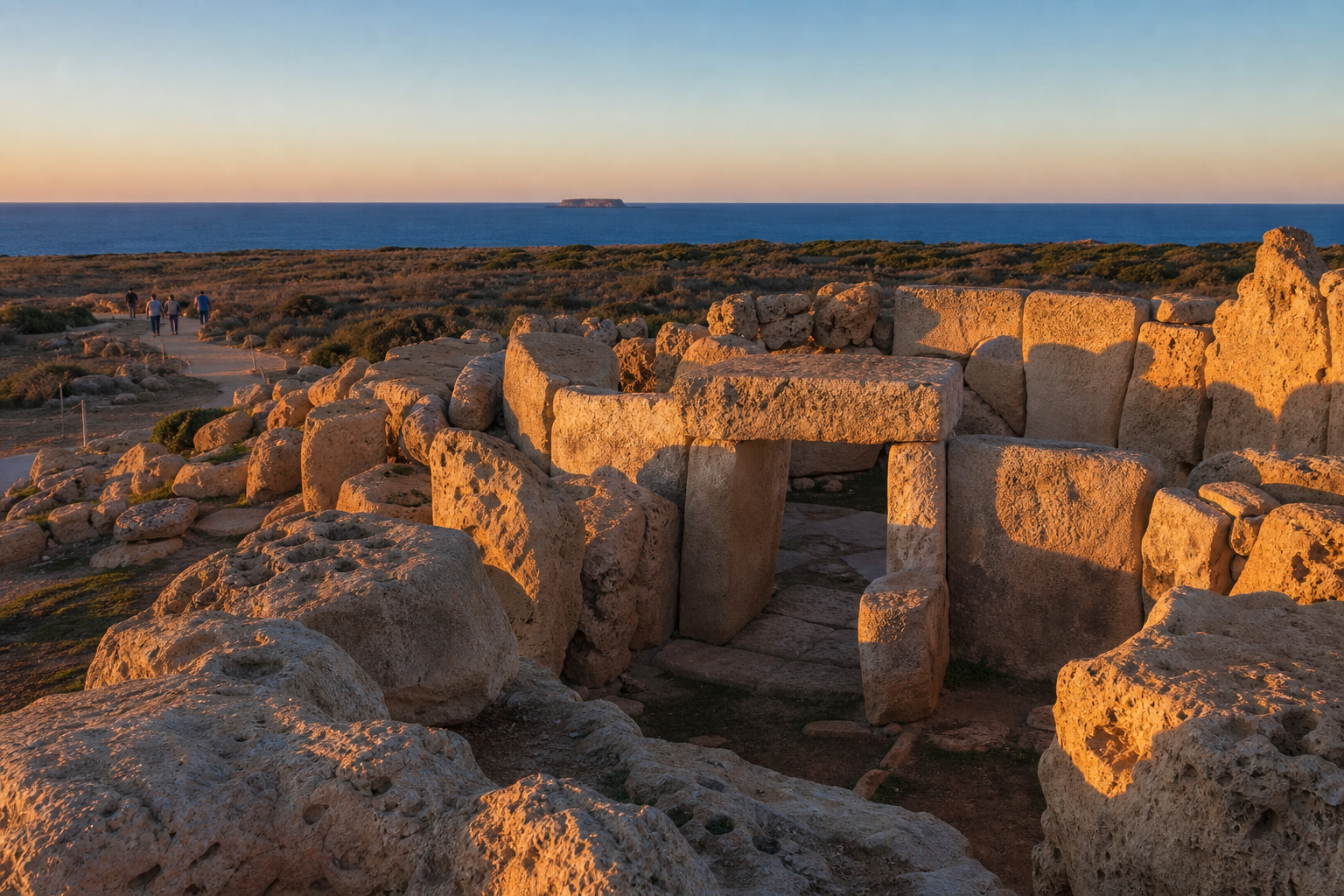
Set on the southern cliffs near Qrendi, these two temples sit in one of the most beautiful spots on the island, looking out over the sea towards the islet of Filfla. Mnajdra is famous for the way the sun’s rays line up with its doorways on the equinoxes and solstices. There’s a good visitor centre and a protective canopy over the temples, and the walk between the two is part of the experience. Read our full guide to Ħaġar Qim and Mnajdra.
Għar Dalam
Għar Dalam in Birżebbuġa is a cave where the bones of animals that lived in Malta thousands of years ago were discovered, including dwarf elephants and hippopotamuses. It’s also where some of the earliest evidence of humans in Malta was found. Kids usually love it.
Skorba and Ta’ Ħaġrat
These two smaller temple sites in the north of Malta are quieter and less visited, but they’re important for archaeologists because of what they revealed about the island’s earliest farmers. Perfect if you want a peaceful visit without the crowds.
Mdina and Rabat
National Museum of Natural History
Inside the elegant Vilhena Palace in Mdina, this museum covers Malta’s geology, fossils, birds, marine life and more. The building alone is worth a look.
Domvs Romana
Just outside Mdina’s gate in Rabat, the Domvs Romana preserves the remains of a wealthy Roman townhouse. Its colourful mosaic floors are among the finest Roman mosaics in the Mediterranean.
St Paul’s Catacombs
Beneath the streets of Rabat lies a maze of early Christian and pagan underground tombs. Walking through the narrow passages gives you a real sense of how people in Roman Malta honoured their dead. Bring good shoes, as some parts are low and uneven.
Gozo
Ġgantija Temples
In Xagħra, the Ġgantija Temples are among the oldest free-standing structures in the world, older than Stonehenge and the pyramids of Egypt. Legend says they were built by a giantess, which is where the name comes from. The visitor centre does a great job explaining who built them and how. Read our full guide to the Ġgantija Temples.
Ta’ Kola Windmill
Also in Xagħra, this restored windmill shows what life was like for a Gozitan miller and his family, with tools, rooms and the original machinery.
The Citadel Museums
Inside the walls of the Citadel in Victoria you’ll find several Heritage Malta museums in one area: the Gozo Museum (archaeology), the Gozo Nature Museum, the Gran Castello Historic House and the Old Prison, where you can still see graffiti carved by prisoners centuries ago. Easy to see together in one visit.
Suggested Heritage Routes
- One day in Valletta: National Museum of Archaeology in the morning, lunch, then the Grand Master’s Palace and Fort St Elmo in the afternoon.
- Prehistoric south: Hypogeum and Tarxien Temples in the morning, then drive to Ħaġar Qim and Mnajdra for the afternoon and sunset on the cliffs.
- Three Cities: ferry from Valletta, Fort St Angelo, the Inquisitor’s Palace and dinner on the Birgu waterfront.
- Mdina and Rabat: Domvs Romana, St Paul’s Catacombs and the Natural History Museum, with a coffee inside Mdina’s walls.
- Gozo day: Ġgantija and Ta’ Kola Windmill in Xagħra, then the Citadel museums in Victoria.
Frequently Asked Questions
Is the Heritage Malta Multisite Pass worth it?
If you plan to visit four or five paid sites or more, it usually pays for itself, and it saves time queuing for tickets. If you only want one or two places, single tickets are cheaper. We do the full maths in our guide to whether the Heritage Malta Multisite Pass is worth it.
Does the Multisite Pass include the Hypogeum?
No. The Ħal Saflieni Hypogeum and Valletta Underground need their own separate tickets.
Is St John’s Co-Cathedral a Heritage Malta site?
No, it’s run separately, so it isn’t included in Heritage Malta tickets or passes.
Which Heritage Malta site should I not miss?
If you can get a ticket, the Hypogeum. If not, Ħaġar Qim and Mnajdra for the setting, and Ġgantija in Gozo for sheer age.
Where can I check opening hours and buy tickets?
On the official Heritage Malta website, heritagemalta.mt, which lists current hours, prices, exhibitions and any temporary closures.
Beautiful Malta is an independent travel guide and is not affiliated with Heritage Malta. Opening hours, prices and availability can change, so please check heritagemalta.mt before your visit.