Most of Malta’s coastline is rock. That’s not a complaint, just a fact: proper sand is genuinely rare here, which is exactly why Golden Bay gets crowded the moment the weather turns warm. Wide, soft, west-facing, and backed by cliffs on three sides, it’s the beach most people picture when they picture a Maltese beach day, and it earns that reputation more than most. This guide covers what actually matters for planning a visit: the real bus route (not the one everyone gets wrong), how far the nearby spots actually are, what the sand used to be called before tourism renamed it, and what to do when the wind ruins the water.
Where Golden Bay actually is
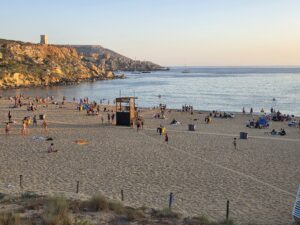
Golden Bay sits on Malta’s north-west coast, between Mellieħa and Mġarr, close to the village of Manikata. It’s part of Il-Majjistral Nature and History Park, and its official Maltese name is Il-Mixquqa; older maps and British-era references call it Military Bay, a name that’s fallen out of use entirely but still turns up in historical documents. Straight-line distance from Valletta is around 16 kilometres, which on Malta’s roads works out to roughly a 35-minute drive. Tall green hills and limestone cliffs wrap the bay on three sides, forming a natural, sheltered bowl, which is also exactly why the beach becomes a sun trap with almost no shade once you’re down on the sand.
Why it’s one of the better sandy beaches on the island
Golden Bay earns its reputation by combining things that rarely show up together on this coastline: proper soft sand rather than pebbles or rock, a gently sloping seabed that makes wading in easy, and water that runs from turquoise near the shore to a deeper blue further out. Because the sand extends well underwater before the drop-off, it’s genuinely one of the more comfortable beaches on the island for families, casual swimmers, and anyone who’d rather not deal with a sudden ledge.
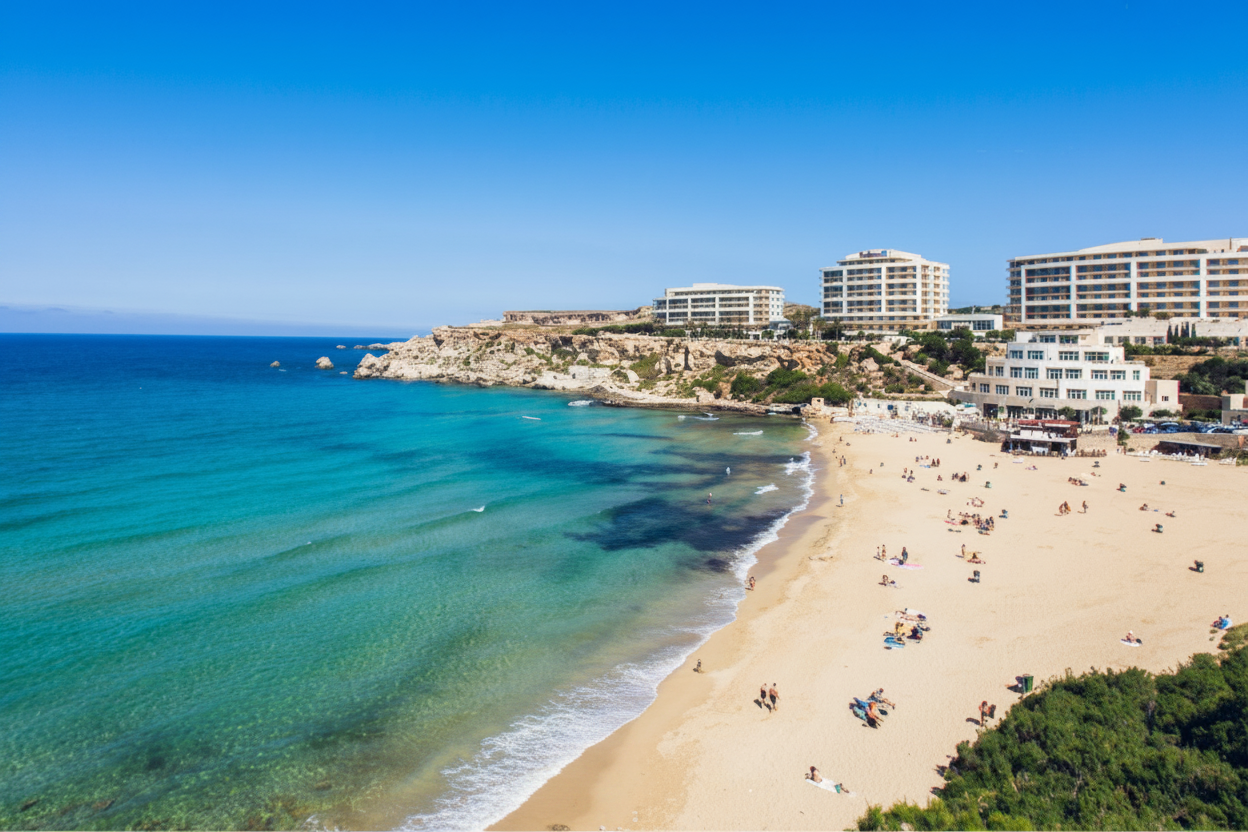
Snorkelling is better toward the rocky edges of the bay than in the open sand in the middle, where small fish, crabs and more interesting underwater terrain show up along the boulders.
The sunset is the actual headline
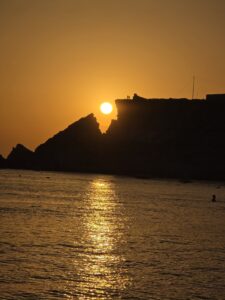
Golden Bay faces almost due west, which means the sun goes down directly into open water rather than sliding behind land, and that single fact does more for its reputation than the sand does. As the light fades, the sea runs through blue, orange and pink, and the limestone cliffs around the bay pick up warm gold and amber tones that make the whole bowl glow.
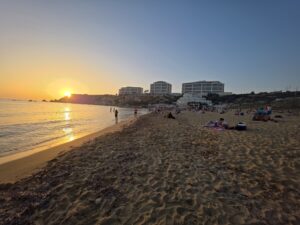
Arrive in the late afternoon, find a spot on the sand or up on the cliff path, and stay to the very end.
Things to do
Swim and snorkel
The shallow, gently sloping sand near the shore makes this one of the easier beaches on the island to actually swim at rather than just look at, and it’s a reliable choice for families with young children for exactly that reason. Head toward the rocks on either side of the bay if you want to snorkel; visibility on a calm day is good, and there’s noticeably more to see there than over open sand.
Water sports
In summer, kayaks and stand-up paddleboards are typically available to rent right on the beach for a slower, self-directed way to explore the bay. If you want something faster, jet skiing, banana boat rides and parasailing all operate seasonally here, and parasailing in particular gives you a wide aerial view of the north-west coast that’s hard to get any other way.
Walk the clifftops
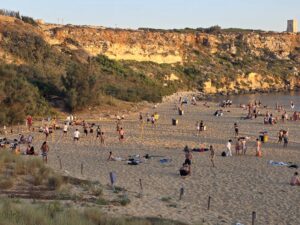
The beach sits inside Il-Majjistral Nature and History Park, and the clifftop trails that open up around it give some of the better coastal views in this part of Malta. Early morning is cooler and quieter; late afternoon gives you the best light for photos. Wear proper shoes rather than sandals, since parts of the path are uneven.
Ghajn Tuffieħa Bay
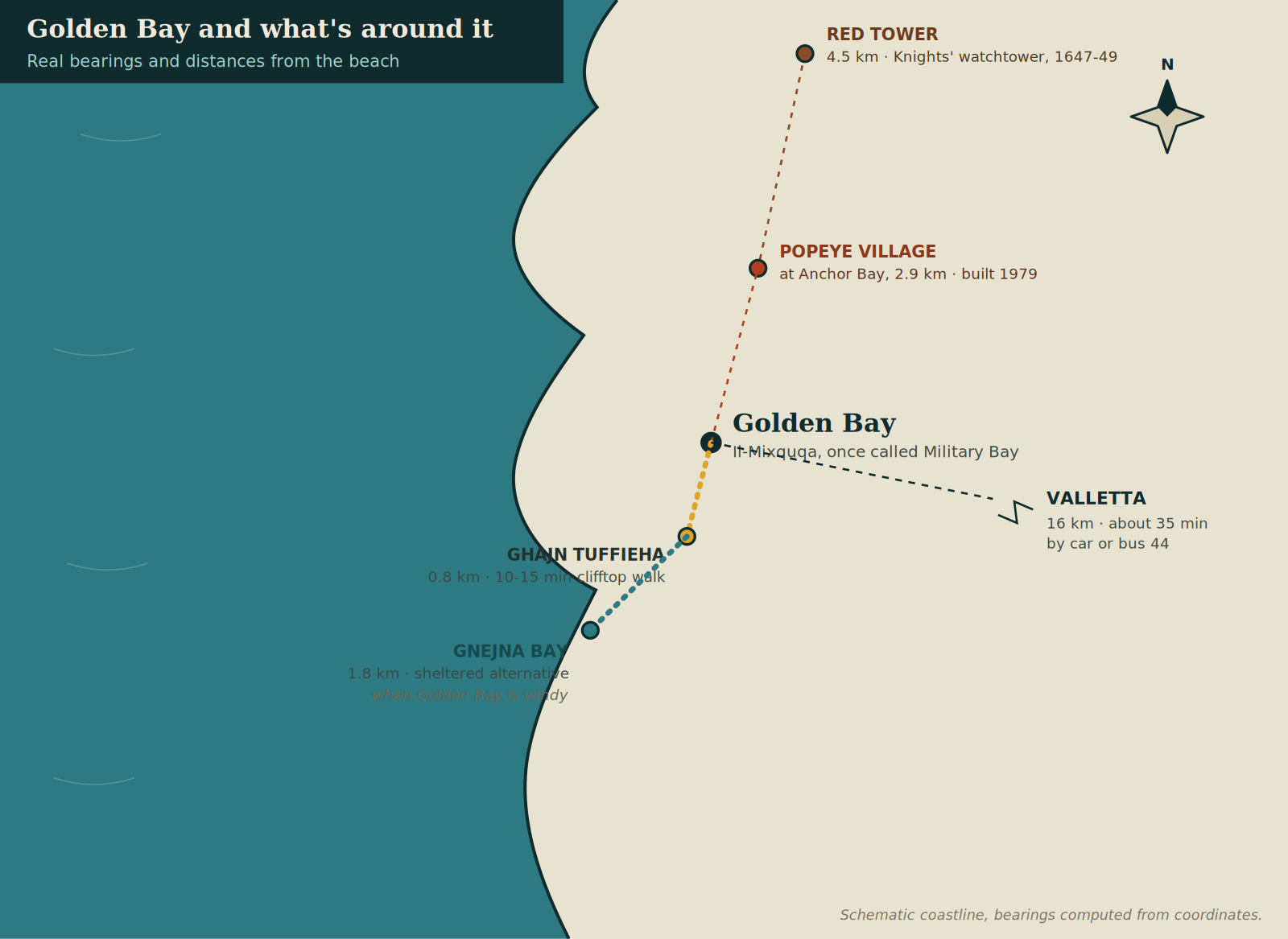
Less than a kilometre south along the clifftop path sits Ghajn Tuffieħa, a 10 to 15 minute walk with genuinely good views on the way. Getting down to the sand means a long flight of steps, and that single obstacle is exactly why this beach stays quieter and feels considerably more natural than Golden Bay itself.
Where to eat
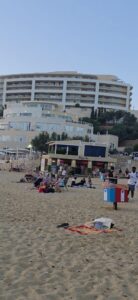
For a proper sit-down meal, the Radisson Blu Resort sits directly above the beach on the northern side, with restaurants and terraces looking out over the water. You don’t need to be a hotel guest to eat there, which makes it the easiest upscale option nearby, whether you’re after lunch, dinner or a sunset drink to close out the day.
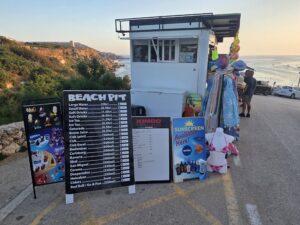
Down on the sand itself, a handful of small kiosks cover the basics: ice cream, bottled water, soft drinks, fruit, burgers and cocktails, useful if you’d rather not leave the beach for lunch.
Travel tips
Getting there
By bus: the direct route from Valletta is bus 44, which terminates at the Għajn Tuffieħa bus stop, a short walk from the beach. From Sliema and St Julian’s, take bus 225 to the same stop; from Buġibba, it’s bus 223. Check the Tallinja app for current timetables, since routes and schedules do shift over time.
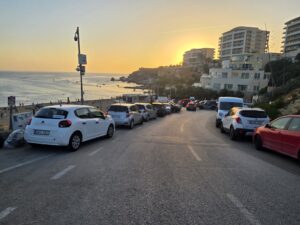
By car: driving here is straightforward, since this part of the island carries far less traffic than Valletta or Mellieħa Bay ( Għadira Bay). There’s a main car park at the top of the hill above the beach, plus additional roadside space further down. In July and August, especially on weekends, parking fills fast, so arrive before 9am if you want a free spot without a long walk down. You may see informal attendants directing cars into the lower spaces near the beach; a tip of €1 to €2 is customary if they help you park. By taxi or rideshare: Bolt and eCabs both cover Golden Bay reliably and show the fare upfront, which avoids the parking problem entirely if you’re coming from Valletta, Sliema or St Julian’s.
Windy days, and where to go instead
Golden Bay is exposed, and it shows: spring and autumn in particular bring stretches of wind that push seaweed and debris onto the sand and leave the water rougher than the postcard version. If you arrive and conditions look poor, Gnejna Bay is about a five-minute drive away and considerably more sheltered, usually staying calmer when Golden Bay is having a bad day. Worth checking the forecast before you commit to the trip.
What to pack
There’s almost no natural shade on the sand, so sunscreen, sunglasses and a hat matter more here than at most Maltese beaches. Sunbeds and umbrellas are available to rent, but they sell out early in peak summer, another reason to arrive before mid-morning. Carry some cash, since not every kiosk or rental reliably takes cards, and bring water shoes or sturdy flip-flops if you’re planning to explore the rockier edges of the bay.
Best time to visit
- June to August: the busiest and hottest stretch, with warm water and every water sport running. Arrive early for parking and a decent spot on the sand.
- September to October: widely considered the sweet spot. The sea is still warm, the heaviest crowds have thinned, and the sunsets photograph just as well.
- March to May: better for scenery and walking than for long swims. The hills turn green, temperatures are comfortable, and the bay is noticeably quieter.
- November to February: too cool to swim for most people, but the beach turns dramatic and peaceful, good for a long walk or photography without anyone else around.
Nearby attractions
Popeye Village
About 3 kilometres north at Anchor Bay sits Popeye Village, also known as Sweethaven, the actual film set built for the 1980 musical Popeye, starring Robin Williams and directed by Robert Altman. Construction ran through the second half of 1979: 165 workers, roughly 19 wooden buildings, timber shipped in from Holland and Canada, and eight tons of nails. It’s genuinely one of the only intact film sets left standing in Europe, now running as a family-friendly open-air attraction with the original wooden houses still in place.
Red Tower (St Agatha’s Tower)
Further north again, on the Marfa Ridge, stands the Red Tower, built by the Knights of St John between 1647 and 1649 as one of the Lascaris towers defending Malta’s northern coast. From the roof, the views run over Għadira Bay and across the strait to Comino and Gozo. It’s a short visit but a worthwhile one for the views alone.
Frequently asked questions
Where is Golden Bay in Malta?
Golden Bay is on Malta’s north-west coast, between Mellieħa and Mġarr near the village of Manikata, within Il-Majjistral Nature and History Park. It’s roughly a 35-minute drive from Valletta.
What bus goes to Golden Bay?
Bus 44 runs directly from Valletta to the Għajn Tuffieħa terminus beside Golden Bay. From Sliema and St Julian’s, take bus 225; from Buġibba, take bus 223. Check the Tallinja app for current timetables before you travel.
Is Golden Bay good for swimming?
Yes. The sand slopes gently into the water, making it easy to wade in without a sudden drop-off, which is part of why it’s popular with families. Snorkelling is better around the rocky edges of the bay than over the open sand.
What is the best time to visit Golden Bay?
September and October offer the best balance: still warm enough to swim, with the heaviest summer crowds gone. June to August is busiest and hottest, while spring suits walking and photography more than swimming.
Is there parking at Golden Bay?
Yes, with a main car park at the top of the hill and additional roadside spaces further down. It fills quickly on summer weekends, so arriving before 9am gives you the best chance of a free spot close to the beach.
What do you do if Golden Bay is too windy?
Gnejna Bay, about a five-minute drive away, is more sheltered and tends to stay calmer when Golden Bay is affected by wind and rough water. It’s the standard local fallback.
How far is Ghajn Tuffieħa from Golden Bay?
Under a kilometre, roughly a 10 to 15 minute walk along the clifftop path. Reaching the sand at Ghajn Tuffieħa involves a long staircase, which is part of why it stays quieter than Golden Bay.
Is Popeye Village near Golden Bay?
Yes, about 3 kilometres north at Anchor Bay. It’s the original film set built for the 1980 movie Popeye, starring Robin Williams, and now operates as a family attraction. Golden Bay works because it doesn’t ask much of you: soft sand, easy water, food within reach, and a sunset that does most of the heavy lifting on its own. Go early if you’re driving in peak season, check the wind if you’re fussy about calm water, and stay for the sunset regardless of what else you do that day.