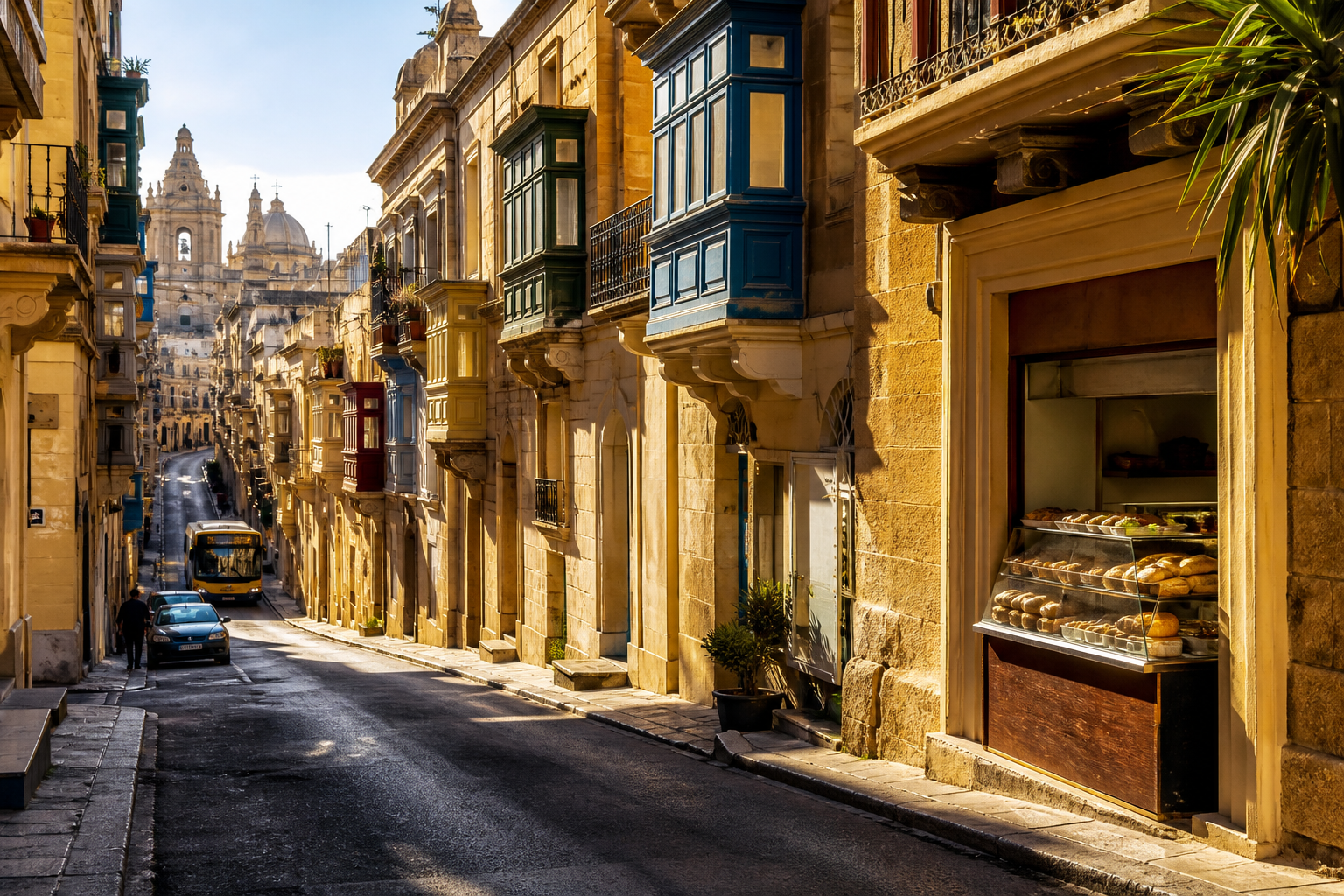
Malta is cheaper than most of Western Europe, but it is not a rock-bottom destination. As a rough guide, plan on about 50-70 euros a day on a tight budget, 100-150 euros a day for a comfortable mid-range trip, and well over 250 euros a day if you want upscale hotels and long dinners. Accommodation is the biggest swing factor, and summer pushes room prices up sharply. This guide shows where the money goes and where you can save.
The daily figures below come from a mix of the official public transport site, our own guides and travel cost write-ups for 2026. Treat the non-official ones as “about” numbers. Prices and times change, so check the official site before you go.
Daily budget in Malta: three levels
Budget traveller: about 50-70 euros a day
This means a hostel dorm or a simple guesthouse, bakery breakfasts, a pastizz or a sandwich for lunch, a casual dinner, and buses everywhere. Hostel beds are usually in the 20-30 euro range outside summer. You will not feel deprived: a lot of the best things in Malta cost little or nothing.
Mid-range traveller: about 100-150 euros a day
Think a 3-star hotel or a decent apartment (roughly 70-110 euros a night in shoulder season), a sit-down dinner with a drink most evenings, one paid attraction a day, and the odd taxi. This suits most couples and first-time visitors.
Upscale: 250 euros a day and up
Boutique hotels in Valletta or a sea-view room in St Julian’s, tasting menus, private drivers and boat charters push you here quickly.
Flights are not included in any of these. Winter, early spring and late autumn are the cheapest times for rooms. Summer, especially July and August, can add 30-40 percent to accommodation. If you are deciding when to go, our Malta in November guide shows what you get for lower off-season prices.
Getting around: what transport costs
Buses
Malta’s buses are the cheapest way to move. According to the official Malta Public Transport site, a single day-route journey costs 2.00 euros in winter (the winter fare runs from 18 October 2026 to 12 June 2027) and 2.50 euros in summer. Night routes and special services are 3.00 euros. A single ticket includes free transfers for two hours, and you can pay the driver in cash or with a contactless card.
If you will ride a lot, travel cards help:
- 12 Single Day Journeys card: 19.00 euros, valid for six months and shareable between people.
- Explore Flex, 4 days: from 21.00 euros, unlimited bus travel including Airport Direct and night routes.
- Explore Flex, 7 days: 27.00 euros, same coverage as the 4-day card.
- Explore Child, 7 days: 7.00 euros for ages 4 to 10. Children under 4 travel free.
The cards also work on buses in Gozo. Fares and card rules are updated from time to time, so confirm them on the official site before you buy.
Airport transfers and taxis
The Airport Direct bus is the budget option at about 3 euros per person. A white taxi from the airport to Valletta or Sliema usually lands around 17-25 euros per car, and Bolt is often a little cheaper at quiet times. Our full breakdown is in the Malta airport to Valletta guide.
Taxis and Bolt are fine for short hops and late nights, but they add up. A few rides a day can cost more than your lunch and dinner combined.
Hiring a car
A small hire car can start around 30-60 euros a day in the shoulder season and rises a lot in summer. Remember fuel, parking and the fact that Malta drives on the left. For a base around Valletta, Sliema and St Julian’s, you can easily manage without one.
Food and drink: how much to set aside
Eating well is one of the best-value parts of a Maltese trip. Typical prices reported for 2026 are about:
- Pastizz from a bakery: under 1 euro, often 0.30-0.50 euros.
- Espresso or cappuccino: roughly 1.20-2.50 euros.
- Half-litre draught beer: about 3-5 euros.
- Casual lunch: about 8-12 euros.
- Two-course dinner with a glass of wine: about 25-45 euros per person at a mid-range restaurant.
A pastizz, a ftira or a plate of pasta at a local place will keep costs low, and portions are generous. Our Maltese food guide explains what to order.
Money-saving tip: pick up breakfast and snacks from a bakery rather than paying hotel prices, and ask about lunch deals.
Sightseeing costs
Many of the best experiences are free. Walking through Valletta, watching the sunset from the Upper Barrakka Gardens, swimming at a rocky cove, wandering around Mdina and visiting village churches cost nothing.
Paid sites are modest. Heritage Malta sites are generally in the single-digit to low double-digit euro range per person. If you plan several, the Heritage Malta Multisite Pass is priced from about 30 to 60 euros depending on the category and is valid for 30 days from first use, covering around 25 sites. It does not include the Hypogeum, Valletta Underground or St John’s Co-Cathedral. Read our Multisite Pass guide to decide whether it pays off. Boat trips and diving cost more, so check current operator prices.
Day trip costs: Gozo and the islands
The Gozo ferry is great value. You do not pay when leaving Malta; the fare is collected on the return from Mgarr and is about 4.65 euros for an adult foot passenger (return) and about 15.70 euros for a car. Children aged 3 to 12 pay about 1.15 euros. Add a bus ride from the ferry and entry to one or two sites and a Gozo day is easily done under 40 euros. See our Gozo day trip guide for the full plan.
Comino and the Blue Lagoon are cheap to reach but can get pricey with boat tickets and sunbed rental in summer. See the Comino guide before you plan.
Where to save money in Malta
- Travel off-season. Hotels cost much less from November to March, and winter bus fares are lower.
- Use the bus for most trips. Keep taxis for late nights.
- Stay near a good bus route. A slightly cheaper area with direct buses beats a central room with a high price.
- Use free beaches and viewpoints. Many swimming spots cost nothing.
- Check the weather and sea first. Malta this week shows weather, wind and sea conditions, which helps before you pay for a boat trip.
Sample budget for 5 days
A mid-range couple staying five nights in shoulder season might spend something like this per person: accommodation around 40-55 euros a night when sharing a room, food and drink about 35-50 euros a day, local transport 5-10 euros a day, and sightseeing about 10-20 euros a day. That puts the total near 100-130 euros a day per person. If you stay in hostels and snack from bakeries, you can come in much lower. Use our Malta itinerary to match the days to your plan.
FAQ: Malta costs
Is Malta expensive for tourists?
It is moderate. Food, buses and sightseeing are good value, but accommodation in summer can be expensive. Visiting outside July and August makes a clear difference.
Can I use euros and cards everywhere?
Malta uses the euro, and cards are widely accepted. Keep a little cash for small bakeries and market stalls.
How much cash should I carry per day?
Many visitors carry a small amount of cash for bakeries and small shops and put the rest on card.
Do I need to tip?
Tipping is appreciated but not required. Many people round up the bill or add a little for good service. Check whether a service charge is already on your bill.
Is a travel card worth it?
If you take about four or more bus rides a day for several days, an Explore card usually works out cheaper than single fares. For a short trip with only a few rides, single tickets can be enough.
Summary
Malta can suit almost any budget. Budget travellers can manage on roughly 50-70 euros a day, mid-range visitors should plan around 100-150 euros, and your biggest saving comes from when you travel and where you sleep. Prices and times change, so check the official sites before you go.
Planning further ahead? Read our complete Malta travel guide for first-time visitors and the is Malta worth visiting in winter guide.