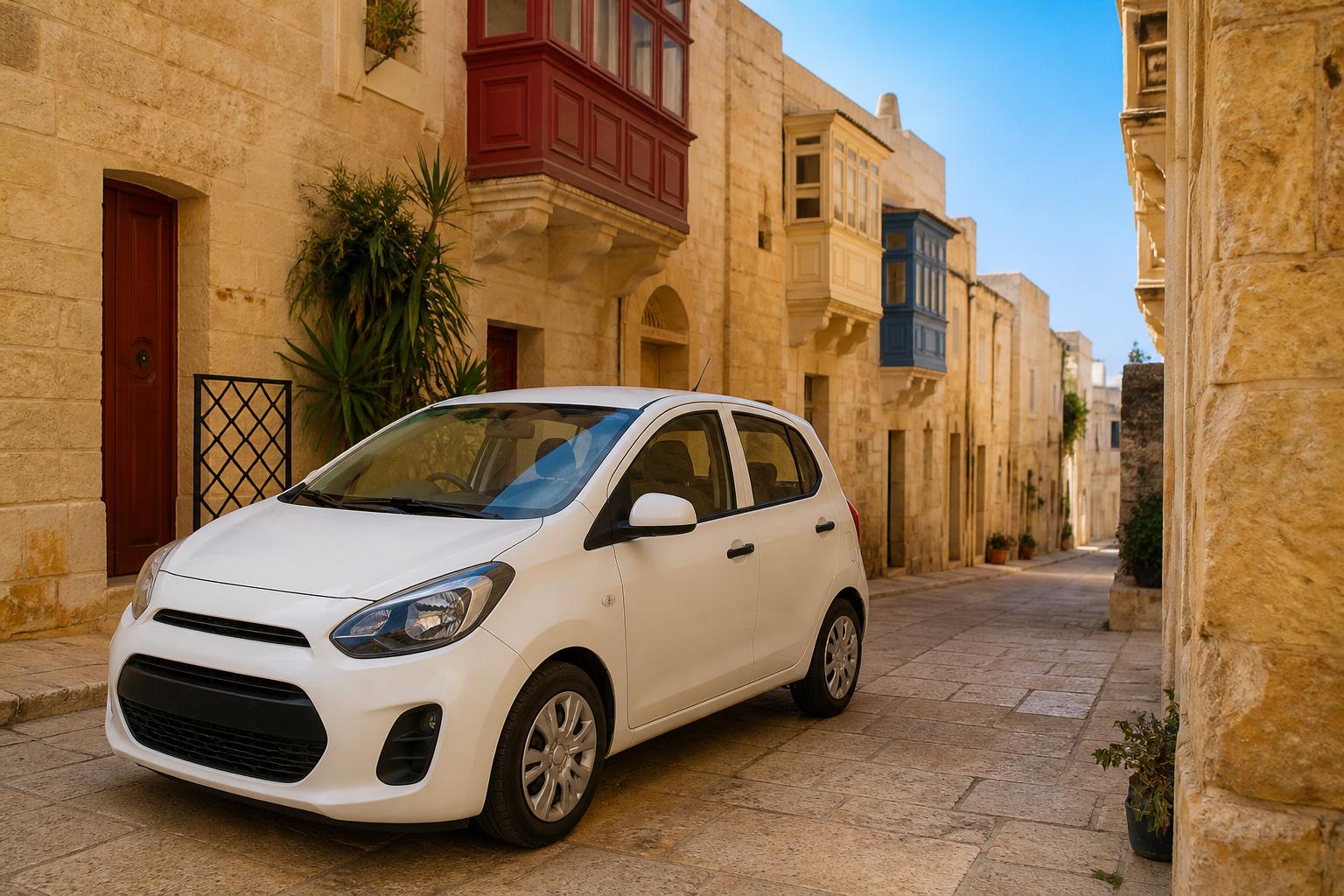
Hiring a car in Malta can be a great way to reach quiet bays, cliffs and village festas that buses do not serve well. It can also be stressful if you are not ready for narrow streets, left-hand traffic and tricky parking. The short answer: a car is worth it if you want to explore the north, the west and Gozo at your own pace, but you can skip it if you are staying in Sliema, St Julian’s or Valletta and only plan a few day trips.
Prices and rules change, so check the official sites and your rental company before you go.
Do you really need a car in Malta?
Malta is small, but public transport can be slow at busy times. Buses cover most places, and our Malta bus and Tallinja card guide explains how they work. Taxis and ride apps fill the gaps, and the airport to Valletta transfer guide shows your options on arrival day.
A car makes sense if…
- You are staying in a quiet area such as the north, the west or a countryside farmhouse.
- You want to visit several beaches or viewpoints in one day.
- You are travelling as a family or group and splitting the cost.
- You plan to spend a few days in Gozo.
You can probably skip it if…
- You are staying in or near Valletta, Sliema or St Julian’s, where parking is hard and buses are frequent.
- You only want one or two organised day trips.
- You do not feel confident driving on the left.
A good middle path is to rent a car for just two or three days, not the whole trip. Our Malta itinerary can help you decide which days need wheels.
Which side of the road do they drive on?
Malta drives on the left, as in the UK, and rental cars are normally right-hand drive. Traffic on roundabouts goes clockwise, and you give way to vehicles coming from your right. Visitors from countries that drive on the right often make mistakes at roundabouts and when leaving junctions, so take the first hour slowly.
Local drivers do not always signal, so watch the wheels and the position of other cars, not just the indicators. On village roads there may be no centre line, and a car can appear round a bend faster than you expect.
Licence and rental requirements
The rules depend on where your licence was issued, so confirm everything with the rental company before you travel.
- EU licence: a valid EU licence can generally be used in Malta.
- UK and other non-EU licences: these are generally accepted for a limited period after arrival, often up to 12 months. Some rental companies may ask for more documents.
- Age: the legal driving age is 18, but many rental companies set a higher minimum, often around 21, and may add a young-driver fee for drivers under 25.
- Payment: most companies ask for a credit card in the driver’s name for the deposit.
- Insurance: basic third-party cover is normally included, but it may not cover damage to your rental car. Check the excess (the amount you pay if something happens) and the optional cover on offer.
Before you drive away, walk around the car and photograph every scratch and dent. Malta’s narrow streets and tight parking mean small marks are common, and photos protect you at return time.
Speed limits and basic rules
- Built-up areas are normally 50 km/h unless a sign says otherwise.
- Outside built-up areas the usual limit is up to 80 km/h, and signs on each road are what count.
- Seatbelts are required for everyone in the car, and young children need a suitable child seat.
- Do not use your phone while driving. Pull over safely if you need to check the map.
- The drink-drive limit is low, so the safest plan is not to drink at all if you are driving.
- In an emergency, call 112.
Speed and phone fines can be expensive, so drive calmly. Malta has no toll roads.
Parking in Malta without the stress
Parking is the biggest headache for visitors, especially in summer and around popular beaches. A few simple habits help.
Read the signs, not just the colours
White bays are generally the safest choice for visitors, though some have time limits. Double yellow lines mean do not park. Blue bays are often reserved for residents, and other bays can be reserved for disabled drivers or loading. Always read the sign beside the bay.
Use car parks near busy places
Near beaches such as the Blue Lagoon, Golden Bay or Ghadira, arrive early, because on sunny weekends the nearest spaces fill fast. Our beaches guide can help you pick a beach and plan the day around the weather.
Valletta and Mdina
Valletta has a Controlled Vehicular Access (CVA) system for vehicles entering the city. According to the CVA website, the charged hours are Monday to Friday from 08:00 to 18:00, with free access after 14:00 on weekdays, on weekends and on public holidays. The first 30 minutes are free, and after that a small hourly charge applies with a daily cap. Check the CVA site for current rates and for how rental cars are billed, because the rental company may pass the charge on to you.
Honestly, the easiest option for many visitors is to leave the car outside and walk or take a bus in. Our Valletta guide shows what to see once you are there. Mdina is also very restricted for cars, so see our Mdina guide before you plan a visit.
Taking a car to Gozo
Many visitors take a rental car on the Gozo Channel ferry from Cirkewwa in Malta to Mgarr in Gozo. Ask your rental company first, because some do not allow their cars on the ferry, and some charge extra or offer a separate Gozo option.
The ferry fare is only charged on the return trip from Gozo to Malta. For 2026, one third-party source lists a standard car and driver fare of about 15.70 euro, but always check the Gozo Channel website for current prices and timetables. In busy periods, expect queues at the terminals. For ideas on what to see once you arrive, read our Gozo day trip guide and our things to do in Gozo page.
Roads, weather and fuel
Malta has few motorway-style roads, and many routes pass through villages with tight bends and parked cars. Satnav can sometimes lead you into very narrow streets, so choose bigger roads when you can. A smaller car makes life much easier.
Heavy rain can flood low-lying roads, and wind and sea conditions can change plans for coastal days. Before you set off, check what is happening in Malta this week for current conditions and events, because festas and street closures can also change your route.
Fuel stations are found across Malta and Gozo, but opening hours differ, so do not leave refuelling until the last minute before you return the car. Return the car with the fuel level agreed in your contract.
How much does it cost?
Prices vary a lot by season, car size and how early you book. Summer is the most expensive time, and winter often has better deals. Remember the extras: fuel, parking, young-driver fees, a child seat, a second driver and insurance upgrades. Our Malta budget guide shows how a car fits into your daily spending.
Frequently asked questions
Is it hard to drive in Malta?
It can feel stressful at first because of left-hand traffic, narrow streets and fast local drivers. Most visitors adapt within a day if they drive slowly and avoid city centres at rush hour.
Do I need an international driving permit?
For many visitors with an EU or UK licence, no, but rules depend on your licence. Ask your rental company what they need and check the official Maltese transport information before you travel.
Can I drive in Valletta?
Yes, but there are access charges at certain times and parking is limited. Many visitors find it easier to park outside the city and walk or take a bus.
Can I take my rental car to Gozo?
Often yes, but check with your rental company first. Ferry fares are charged on the way back from Gozo, so confirm the current price with Gozo Channel.
Is it better to hire a car or use buses and taxis?
If you are based in a busy resort area, buses and taxis are often simpler. If you want freedom to visit quiet beaches and villages, a car for a few days is usually worth it.
In short
A hire car gives you freedom in Malta, but it is not essential for everyone. Choose a small car, take photos at pick-up, read parking signs carefully, and keep Valletta and Mdina for walking. Check official sites for the latest rules and prices.
Planning further ahead? Read our Malta itinerary and our Gozo day trip guide.