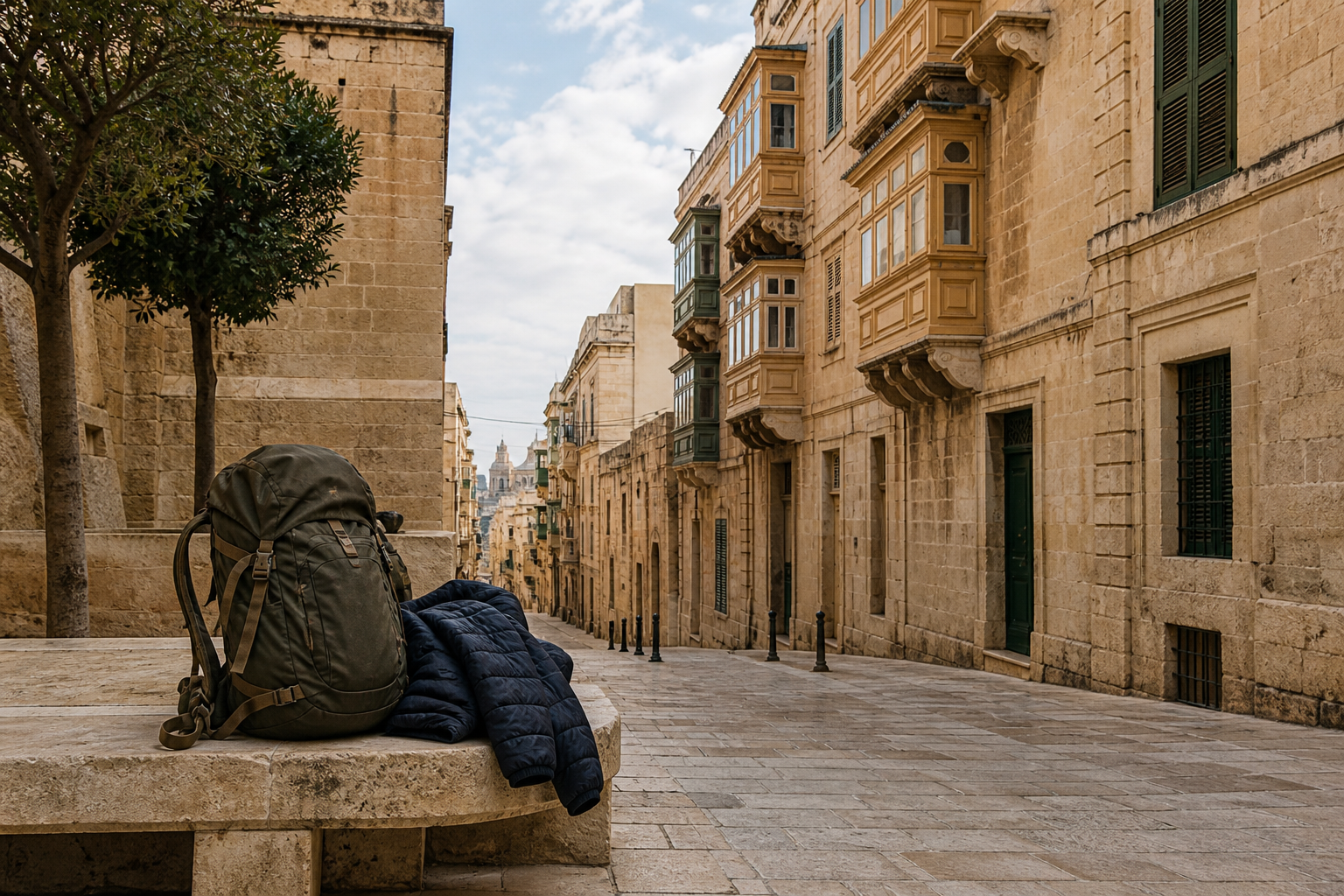
Short answer: pack layers, a light waterproof jacket, comfortable walking shoes and one warm evening layer. Malta in winter is mild compared with northern Europe, but it is not beach weather, and wind and short heavy showers catch many visitors out. This guide covers what to expect and what to put in your bag.
What the weather is really like
According to the UK Met Office climate averages for Malta, daytime highs are about 17°C in December, around 16°C in January and February, and back to about 17°C in March. Nights are cooler, roughly 9 to 11°C. Rain falls on the same pattern: about 80 to 90 mm a month from November to February, dropping to around 40 mm in March. Sunshine averages about 5 to 6 hours a day in the middle of winter.
Those numbers sound gentle, but the feel is different. Malta is a small, open island, so a breeze off the sea can make 15°C feel much colder, especially on the bastions of Valletta, on the cliffs or on the Gozo ferry. Rain often comes in short, heavy spells rather than all day. For current conditions before you fly, check our Malta this week page.
If you are still deciding on dates, our guide on whether Malta is worth visiting in winter goes through the pros and cons.
The core packing list
Clothing
- Light layers: t-shirts or thin tops, a shirt, and a jumper or fleece. You will often be warm in the sun and cold in the shade within the same hour.
- A warm jacket: a packable down or padded jacket works well for evenings, ferry crossings and windy viewpoints.
- A waterproof layer: a thin rain jacket with a hood is more useful than a big umbrella, because wind can turn umbrellas inside out.
- Long trousers or jeans: better than skirts or shorts for cool evenings. Pack one pair of shorts only if you are travelling in November or March.
- A scarf or shawl: handy for warmth and for covering your shoulders in churches, where modest dress is expected.
Shoes
Valletta, Mdina and the Three Cities are full of steps, slopes and old stone streets. Bring comfortable closed shoes with a good grip. Polished limestone gets slippery when wet, so smooth leather soles are a poor choice on a rainy day. Sandals are only really useful in November or on an unusually warm day.
Small extras
- A small daypack for day trips, water and an extra layer.
- Sunglasses and sun cream. The winter sun is weaker but you can still burn on a clear day.
- A UK-style plug adapter if your devices use another plug type. Malta uses the UK three-pin plug at 230V.
- A reusable water bottle.
- A phone case or zip bag if you plan to walk the coast in changeable weather.
Should you pack swimwear?
The Met Office gives average sea temperatures of about 18°C in December, 16°C in January and 15°C in February. Most visitors will not want a long swim, although some locals do swim all year round. If you like the idea of a quick dip or a hotel spa, bring swimwear, but do not plan the trip around it. If you are visiting in early November, the sea is still warmer, and our beaches guide will help you pick a sheltered spot.
What to pack month by month
November
Still mild, with highs around 20°C, but it is also one of the wetter months. Bring light layers and a rain jacket. See our Malta in November guide for more.
December
Cooler, with highs around 17°C. Add a warmer jacket and a scarf, especially if you will be out in the evening for festive events. Our Malta in December and Christmas in Malta pages cover what is on.
January and February
The coolest months, with highs around 15 to 16°C and lows near 9°C. Pack your warmest layers and make sure your jacket is windproof. February can be wet, and it is also carnival season, so expect crowds and colour in the streets. Read more in Malta in January and Malta in February.
March
Drier and brighter, with highs back around 17°C and about 7 hours of sun a day. A light jacket and layers are usually enough.
Packing for what you plan to do
Sightseeing and museums
Winter is a good time for temples, forts and museums because it is cooler for walking and queues are shorter. Many of these sites have indoor sections, which helps on rainy days. If you will visit several, see our heritage guide and the Heritage Malta multisite pass page. Bring a layer, as stone temples and underground sites can feel cool.
Coastal walks and Gozo
Wind is strongest on the cliffs and on the ferry. Pack a windproof jacket, sturdy shoes and a hat that stays on. Check the forecast the night before, since rough seas can affect sailings.
Evenings out and festive events
Malta is relaxed about dress. Smart casual is fine almost everywhere. Add a warm layer for outdoor events, such as the New Year celebrations in Valletta, which you can read about on our New Year’s Eve page. For a full list of upcoming dates, see Events in Malta.
Things you can leave at home
- Heavy snow boots, thick wool coats or thermal underwear. Malta does not get cold enough for these.
- Several pairs of heels. The streets are hard on them.
- Big umbrellas. A hooded jacket is easier in the wind.
If you forget something, Valletta, Sliema and the large shopping centres sell everything you will need, though prices may be higher than at home.
FAQ
Is Malta warm enough for shorts in winter?
Usually not from December to February, when highs are around 15 to 17°C. In November and March you may get a warm afternoon, but it is wise to carry long trousers as well.
Do I need a heavy coat in Malta?
No. A light to medium jacket plus layers is enough for most people. Wind is the main reason to bring something warmer than you might expect.
Will it rain during my trip?
It can. Rainfall averages around 80 to 90 mm a month from November to February, often in short, heavy showers. Pack a waterproof layer and plan an indoor activity for a wet day.
Can I swim in Malta in winter?
The sea is about 15 to 18°C from December to February, so it is cold for most people. Bring swimwear only if you are keen on a quick dip or have access to a heated pool.
What plug do I need in Malta?
Malta uses the UK-style three-pin plug (type G) at 230V. Visitors from other countries should bring an adapter.
Summary
For a winter trip, think layers, wind and short rain showers rather than cold. Pack a warm but light jacket, a waterproof layer, comfortable shoes with a good grip, and enough clothing to adapt through the day. Weather averages here come from the Met Office, but real conditions change from day to day, so check the forecast before you fly and again on arrival.
Prices and times change, check the official site before you go.
Planning further ahead? Have a look at our complete Malta guide for first-time visitors and our Maltese food guide.