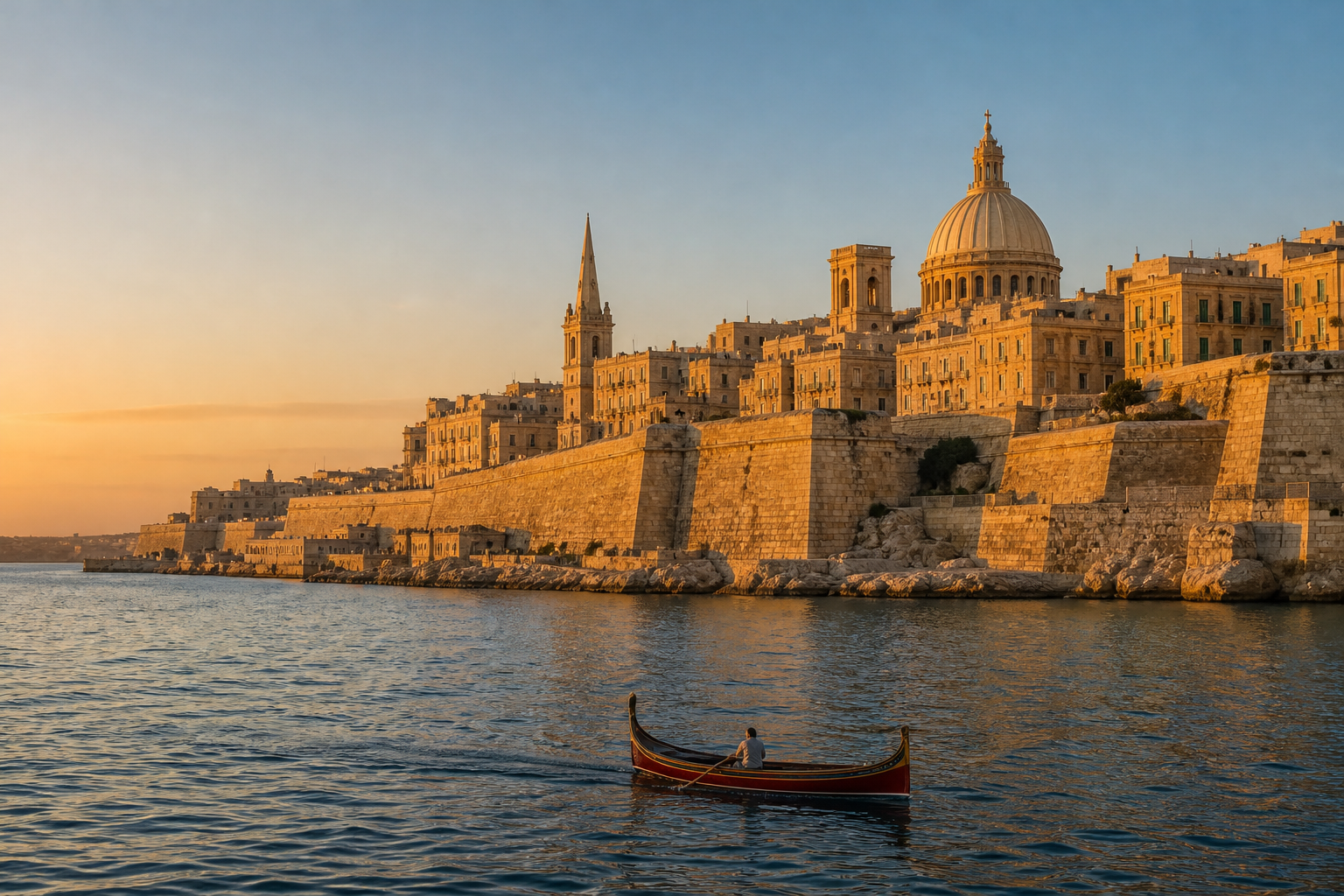
The short answer: three days is enough to see Valletta, Mdina and the Three Cities, five days lets you add Gozo and a slower coastal day, and seven days gives you time for temples, beaches and some rest. Malta is small, so the real skill is grouping sights by area and not zig-zagging across the island. Below you will find a day-by-day plan for each trip length, built around public transport, so you do not need a car.
Not sure when to come? Our guides to Malta in November and Malta in December show what each season is like. These plans work all year, with a few swaps for rain.
Before you start: three planning basics
Getting around
Buses reach almost everywhere. On the official Malta Public Transport fares page, a day-route single ticket is listed at 2.00 euro in winter (from 18 October 2026 to 12 June 2027) and 2.50 euro in summer, and a ticket lasts two hours with free transfers. Multi-day Explore cards also exist. Taxis and ride-hailing apps such as Bolt fill the gaps, especially late at night. Arriving by air? Our airport to Valletta guide covers the options.
Where to base yourself
Valletta, Sliema and St Julian’s are the easiest bases for first-timers because buses and ferries are close. Valletta is quieter in the evening; St Julian’s has more nightlife. All the day plans below start from that central part of the island.
Check conditions first
Wind and swell can change boat trips and coastal walks. Before you go, look at Malta this week for current conditions and events.
Malta in 3 days
Day 1: Valletta
Start early in Valletta, a UNESCO World Heritage city of steep streets and honey-coloured limestone. Walk down Republic Street, visit St John’s Co-Cathedral (it was listed at about 15 euro for adults and closed on Sundays when we checked, so confirm on its website), and look out over the Grand Harbour from the Upper Barrakka Gardens. The Saluting Battery fires a gun at noon, with a short commentary beforehand. In the afternoon, see Fort St Elmo and the National War Museum or the National Museum of Archaeology, which is a great warm-up for the temples later.
Day 2: Mdina, Rabat and the west
Take a bus to Mdina, the old walled capital known as the Silent City. Only residents may drive inside, so it really is calm. Walk the lanes, then continue to neighbouring Rabat for St Paul’s Catacombs. Later in the day, head to the cliffs near Dingli for sunset if the weather is clear. Bus connections to the cliffs are less frequent, so check times or use a taxi back.
Day 3: The Three Cities
Cross the Grand Harbour from Valletta by the small harbour ferry (a day single is about 3 euro, per a 2026 ferry price guide, so check on the day). In Birgu, wander the narrow streets and see Fort St Angelo and the Inquisitor’s Palace. Finish with dinner back in Valletta or Sliema.
Malta in 5 days
Keep the three days above, then add two more.
Day 4: Gozo
Take the Gozo Channel ferry from Cirkewwa to Mgarr. According to Gozo Channel, the crossing takes about 25 minutes and the service runs daily. Passengers normally pay on the Gozo side, so keep your ticket for the return. Once on Gozo, bus or taxi to Victoria and its Citadel, then see the Ggantija Temples, among the oldest freestanding stone buildings in the world. If time allows, end at Ramla Bay. Leave early: Gozo needs a full day, and it is easy to rush.
Day 5: Coast, food and a slow day
Spend a flexible day on the east or south coast. On a Sunday morning, the fish market in Marsaxlokk is a classic stop. Otherwise choose a coastal walk or a beach day when the weather allows (see our beaches guide). Eat a pastizzi snack and a proper Maltese lunch; our Maltese food guide explains what to order.
Malta in 7 days
Add two more days to the five-day plan, or reshuffle them to match the weather.
Day 6: Temples and prehistory
Malta’s temples are older than the pyramids. The Tarxien Temples are easy to reach. The underground Hypogeum needs advance booking: Heritage Malta lists adult tickets at about 35 euro, advises booking early, bans children under 6, and does not allow photography. Closed, comfortable shoes are required. Read our temples guide and, if you are visiting several sites, check the Heritage Malta multisite pass.
Day 7: Beach, boat or a second Gozo day
In warmer months, pick a beach such as Golden Bay or Ghadira Bay, or visit the Blue Lagoon on Comino (boat services run mostly in the warmer season, so check ahead). In winter, a second day on Gozo or a long lunch and a walk along the Sliema or St Julian’s promenade works well.
Practical tips that save time
Buses and tickets
You can pay for a single bus journey with cash or a contactless bank card on board. Malta Public Transport also sells multi-day Explore cards; at the time of writing the 7-day adult card was listed at roughly 25 to 27 euro depending on the card type, so check the official fares page for the current price and for what each card covers. If you cannot show a valid ticket on a bus, the fine listed on the official page is 50 euro, so always keep your ticket until you get off.
Start early, finish with a view
Valletta, Mdina and the temples are far more pleasant before the tour groups arrive. Plan the busiest sights for the morning and keep the evening for a harbour-side dinner or a sunset walk. In winter the days are shorter, so check sunset times and plan outdoor stops for the middle of the day.
Wear the right shoes
Limestone streets can be slippery when wet, and Valletta is full of steps and slopes. Comfortable shoes with grip matter more than anything else you pack. The Hypogeum also requires closed shoes.
Leave room in the plan
The best itineraries are not packed hour by hour. Leave a gap each day for a coffee, a bakery stop or a viewpoint you did not plan. If a ferry is cancelled or the weather turns, you can swap days around without losing anything important.
Rainy-day swaps
Malta has short, heavy rain spells in winter. Swap beach or cliff time for museums, churches and food. The National Museum of Archaeology, the Inquisitor’s Palace and the Hypogeum are indoor options, and Valletta has plenty of cafes to sit out a shower.
Which length is right for you?
Three days is a good city break. Five days fits most first visits. Seven days suits people who want a mix of history, sea and rest without rushing. If you only have a long weekend, put Valletta and the Three Cities together on the same day and keep Mdina for day two.
FAQ
Do I need a car for these itineraries?
No. Every stop in these plans can be reached by bus, ferry or taxi. A car is useful only if you want to explore remote spots, and Malta drives on the left, so it is not for everyone.
Is three days enough for Malta?
Yes for the highlights: Valletta, Mdina and the Three Cities. You will miss Gozo and the beaches, though.
Should I visit Gozo in a day?
A day trip is enough for the Citadel, the Ggantija Temples and one beach. Stay overnight if you want to slow down.
What should I book in advance?
The Hypogeum sells out, so book it early. For everything else, check opening hours and closures on the official sites, especially on Sundays and public holidays.
Summary
Group sights by area, use buses and ferries, and keep one flexible day for weather. Prices and times change, so check the official site before you go.
Planning further ahead? Read our complete first-time visitor guide and see what is on in Malta events.