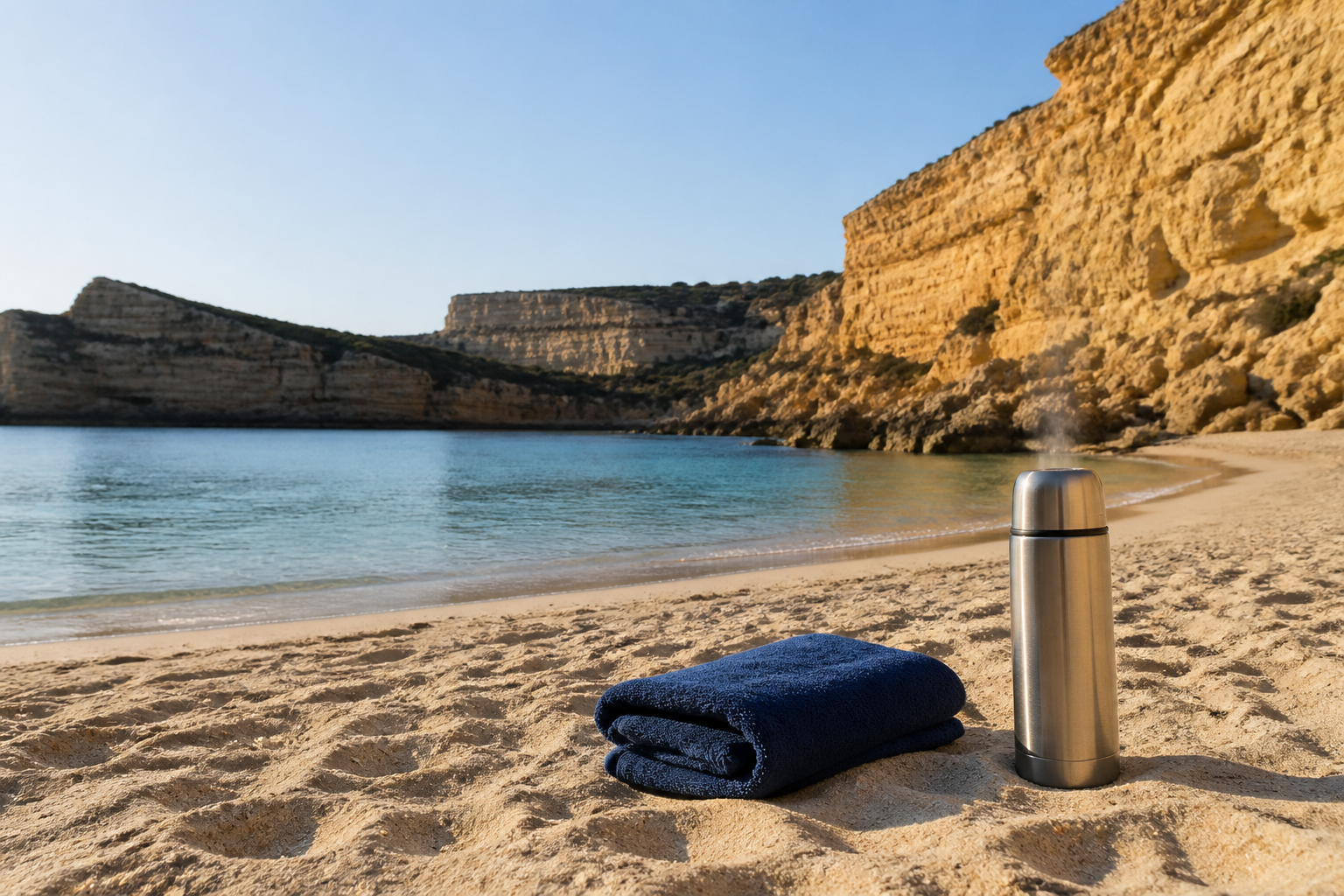
Yes, you can swim in Malta in winter, but it is a short, brisk dip rather than a beach day. From December to March the sea sits at roughly 15 to 19°C, which is cold enough that most visitors stay on the sand with a coffee. Locals and keen swimmers do get in, and with a little preparation you can too. This guide explains what the water is really like, where to try it, and how to stay safe.
How cold is the sea in Malta in winter?
Using monthly averages for Valletta, the sea is about 21°C in November, 18°C in December, 16°C in January, 15°C in February and 15°C in March, before climbing back to about 16°C in April. Different websites round these numbers differently, so treat them as a guide of plus or minus one degree.
For comparison, the air is not much warmer. Daytime highs are around 17°C in December and 15°C in January and February, and it rains on roughly 9 to 13 days a month in winter. A sunny, windless afternoon can feel pleasant, but the moment the wind picks up, getting out of the water feels much colder than getting in.
November is the sweet spot. The sea is still near 21°C, so a swim is realistic for many people. If you are visiting soon, read our autumn swimming guide, which is also useful in the first weeks of November.
Who should (and should not) swim in winter
A winter dip suits confident swimmers who are already used to cold water. It is not a good idea for small children, people with heart or breathing problems, or anyone who is unsure. If you have a health condition, ask a doctor before trying cold water. We cannot give medical advice here, only the basics.
Cold water can take your breath and strength faster than you expect. The main risks are the shock of the first minute, tiredness in the arms and legs, and getting cold after you come out. Short, shallow, close-to-shore swims are the sensible choice.
Best places for a winter swim
Winter in Malta brings rougher days. Waves and wind decide whether a bay is pleasant or off-limits, so pick the spot after you check the forecast, not before. Our Malta this week page shows the 7-day weather, wind and current sea temperature, and it is the first thing to open on the morning of your swim.
Sandy bays with an easy walk-in
A gentle sandy entrance is far better than rocks in cold water, because you can step in slowly and leave quickly. Għadira Bay in Mellieħa is a long, shallow sandy beach and a good first choice on a calm day. West-facing bays such as Għajn Tuffieħa are lovely in winter light, but they can get strong waves after a storm, so only go in when the sea is calm. You can browse more options on our beaches page.
Rocky coast swims
Many people on the east coast swim from rocky platforms with ladders, for example around Sliema and St Julian’s. These are fine for experienced swimmers on calm days, but rocks get slippery with winter spray, and a ladder is the only way out. If the sea looks lively, skip it.
St Peter’s Pool and cliff spots
Natural rock pools and cliff-jumping areas look beautiful in winter, but swell can make them dangerous and the exit points are limited. Read our guide to St Peter’s Pool before you go, and enjoy the views from dry land if the water is rough.
Gozo and Comino
Gozo has quiet coves that feel peaceful in winter, but services such as kiosks and boat trips are limited. Boat services to Comino are reduced outside summer, so check the operator for the day before you plan a swim there.
Safety flags, lifeguards and swimming zones
Not every beach in Malta has a lifeguard, and where cover exists it is mainly during the bathing season, so you should assume there is no lifeguard in winter unless a sign tells you otherwise. Flags used on Maltese beaches work like this:
- Green: generally calm conditions.
- Yellow: take extra care.
- Purple: a hazard such as jellyfish.
- Red: dangerous, swimming is not recommended.
- Double red: the water is closed to swimmers.
Designated swimming zones are marked by buoys and keep boats away from swimmers. Zone limits can change, and a zone does not make the water safe or calm. Always follow the signs, flags and any local advice. If there is no flag at all, use common sense and stay out in rough conditions.
What to bring for a winter dip
Preparation matters more than bravery. A good kit list is short:
- A wetsuit or at least a rash vest and swim cap. These keep heat in and make a real difference in 16°C water.
- A big towel and a warm change of clothes. Get dry and dressed straight away once you leave the water.
- A hat, a windproof jacket and a hot drink in a flask. Wind is what makes you cold after the swim.
- Shoes for rocks. Neoprene beach shoes help on slippery entries.
- A friend. Do not swim alone in winter.
Warm up on the beach first, enter slowly, and get out as soon as you feel too cold. Five to ten minutes is plenty for most people.
The New Year’s Day dip
Some people in Malta start the year with a swim on 1 January, often at a sandy beach such as Golden Bay, followed by a hot drink. It is an informal habit among friends rather than a big official event as far as we could confirm, so there is no fixed organiser or time to rely on. If you plan to join, go with other people, check the sea first, and keep it short. Our New Year’s Eve in Malta guide has ideas for the night before.
Diving and snorkelling in winter
Scuba diving continues all year in Malta, and divers normally wear thicker suits in the cold months. Dive centres will tell you what they provide. Casual snorkelling in 15 to 16°C water is uncomfortable without a proper suit, so it is better to wait for late spring if you do not have one.
Cold day? Do these instead
Many hotels have indoor or heated pools, so ask your accommodation before you book if swimming matters to you. On days when the sea is too rough or cold, there is plenty to do on dry land. Try our guide to things to do in Malta when it rains or plan a walk along the coast.
FAQ: swimming in Malta in winter
Is it safe to swim in Malta in December?
It can be, on calm days, if you are a confident swimmer and keep the swim short. The sea is around 18°C, which is cold. Check the flags and forecast, and avoid swimming alone.
Which month is the coldest for the sea?
February and March are usually the coldest, at about 15°C on average. The sea warms slowly through spring.
Are there lifeguards on Malta beaches in winter?
Lifeguard cover is mostly seasonal and tied to the bathing season, so do not expect one in winter. Look for signs on the beach and ask the local council if you are unsure.
Do I need a wetsuit?
For more than a quick dip, yes, a wetsuit makes a big difference. If you only want a few minutes, a swim cap and rash vest help, and a warm change of clothes is essential.
When does the sea feel warm enough for most people?
Most visitors find it comfortable from about late May or June. Our best time to visit Malta guide shows the month-by-month picture.
Summary
Swimming in Malta in winter is possible and can be fun, but it is for confident swimmers who choose a calm day and a gentle sandy bay. Keep it short, wear a wetsuit if you can, never swim alone, and warm up fast afterwards. Otherwise, enjoy the sunny walks and wait for spring for a proper beach day. Sea figures are averages and change from year to year, and flags and local rules can change, so check the official information before you go.
Planning further ahead? Read our guides to Malta in January and Malta in February.