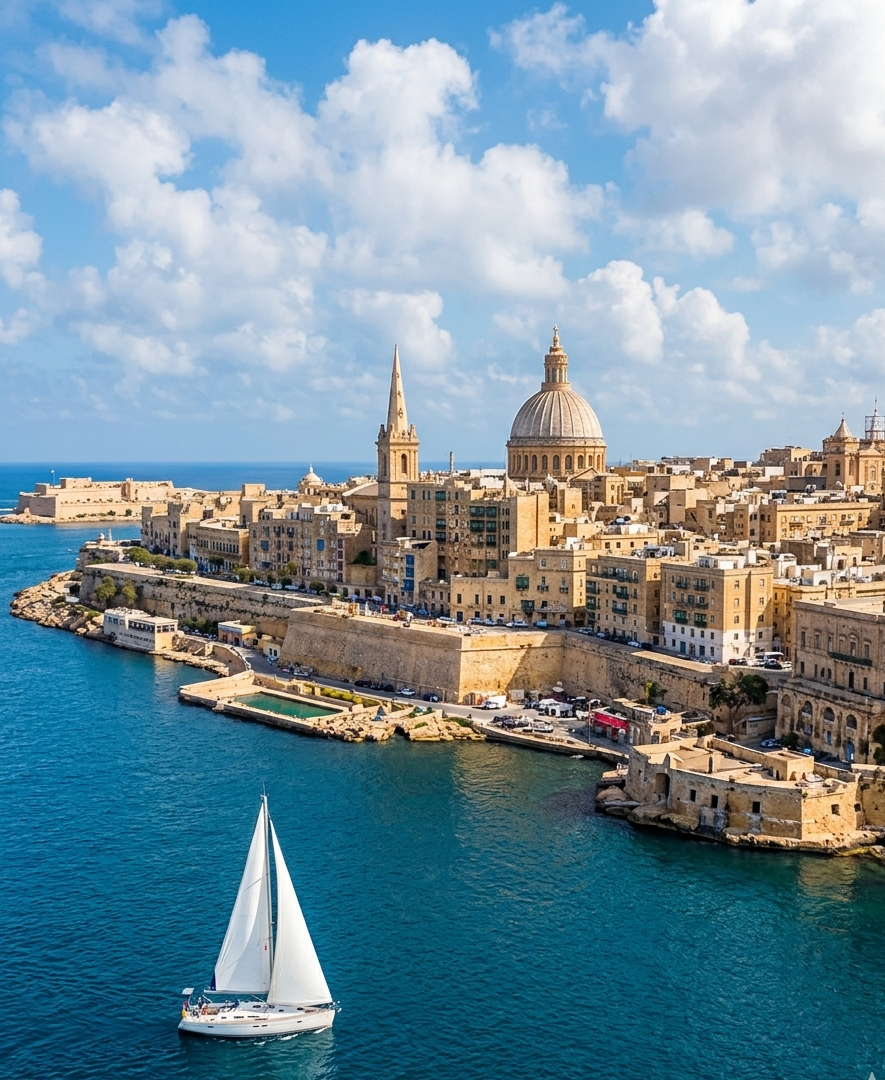
Malta is tiny. You can drive from one end to the other in under an hour. But it packs more into that small space than almost anywhere in the Mediterranean: 7,000 years of history, three UNESCO World Heritage Sites, prehistoric temples older than the pyramids, a capital built by knights, turquoise lagoons, red-sand beaches and a sister island, Gozo, that feels like a different country.
This guide is written by people who live here. Below you will find the 25 best things to do in Malta and Gozo, with practical tips, honest notes on what to skip, sample itineraries and answers to the questions first-time visitors ask us most.
Quick picks: if you only have a few days
- History lovers: Valletta, St John’s Co-Cathedral, the Ħal Saflieni Hypogeum, Mdina and Ħaġar Qim
- Beach lovers: the Blue Lagoon (early or late), Golden Bay, Għajn Tuffieħa, Ramla Bay in Gozo
- Families: Popeye Village, Għadira Bay, Ta’ Qali National Park, the Buġibba Water Park in summer
- Photographers: Upper Barrakka at sunrise, Dingli Cliffs at sunset, Marsaxlokk boats, Wied il-Għasri in Gozo
- Foodies: pastizzi, a rabbit dinner, Sunday fish in Marsaxlokk, a village festa
Valletta and the Grand Harbour
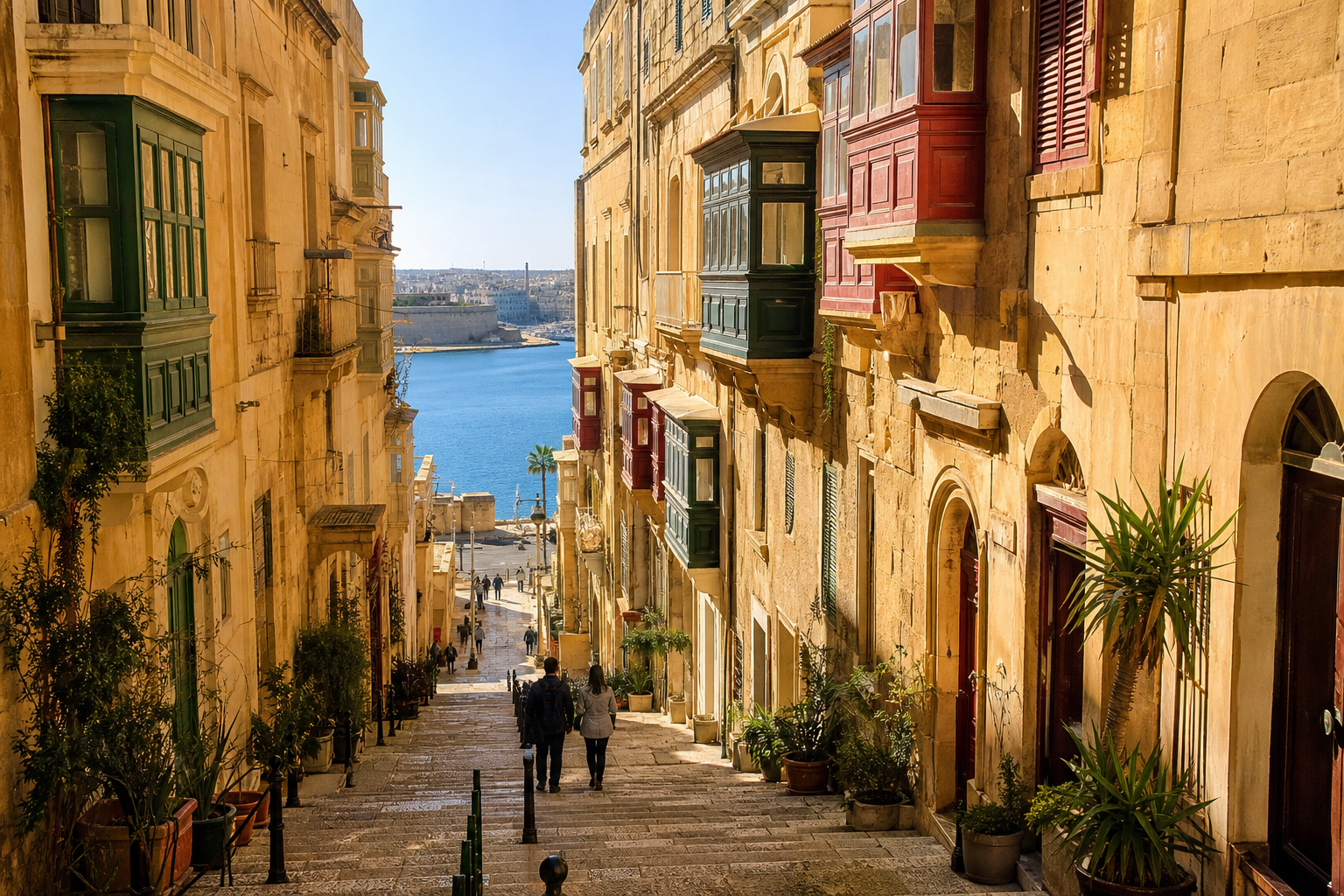
1. Spend a full day in Valletta
Malta’s capital was built in just a few decades after the Great Siege of 1565, and the whole city is a UNESCO World Heritage Site. It is small enough to cross on foot in 15 minutes, but give it a full day. Walk Republic Street and Merchants Street, look up at the coloured wooden balconies, get lost in the side streets running down to the sea and stop for coffee in one of the little squares.
Read our full Valletta guide for history, food and parking tips.
2. See Caravaggio in St John’s Co-Cathedral
From the outside, St John’s looks plain. Inside, it is one of the most lavish baroque churches in Europe, with a floor made entirely of marble tombstones of knights, and Caravaggio’s huge Beheading of Saint John the Baptist, the only painting he ever signed. Tickets are around €15 for adults and it is closed on Sundays and public holidays. Go at opening time on a weekday to beat the cruise groups, and cover your shoulders and knees.
3. Watch the noon gun at the Upper Barrakka Gardens
The Upper Barrakka Gardens have the best free view in Malta, straight across the Grand Harbour to the Three Cities. Every day except Sunday, the Saluting Battery below fires its cannons at 12:00 and 16:00. Arrive by 11:45 for a good spot. For a quieter view of the harbour entrance, walk on to the Lower Barrakka Gardens.
4. Visit Fort St Elmo and the National War Museum
At the tip of the Valletta peninsula, Fort St Elmo held out for weeks against the Ottomans in 1565 and later defended Malta in the Second World War. The museum inside tells Malta’s military story and displays the George Cross awarded to the whole island. Pair it with the National Museum of Archaeology on Republic Street.
5. Take the ferry to the Three Cities
From the Valletta waterfront, a short ferry or a ride in a traditional dgħajsa water taxi takes you across the harbour to Birgu, Senglea and Cospicua. These towns are older than Valletta, much quieter, and full of character. In Birgu, visit Fort St Angelo and the Inquisitor’s Palace, then walk out to the Gardjola watchtower in Senglea for a view back to Valletta. Start with our Three Cities guide.
Ancient Malta: temples older than the pyramids

6. Go underground at the Ħal Saflieni Hypogeum
Under an ordinary street in Paola lies a three-level underground temple and burial site cut into the rock more than 5,000 years ago. Nothing else like it exists anywhere in the world. Only small groups are allowed in each day to protect it, so book weeks, sometimes months, ahead. If it is sold out, read our Hypogeum guide for tips on last-minute tickets.
7. Stand on the clifftop at Ħaġar Qim and Mnajdra
Two temple complexes on the southern cliffs, facing the sea and the islet of Filfla. Mnajdra is aligned with the sun, and on the equinoxes the first light shines straight through its main doorway. Read our Ħaġar Qim and Mnajdra guide, and combine it with the Blue Grotto just down the road.
8. Visit Ġgantija in Gozo
Ġgantija in Xagħra is one of the oldest free-standing structures on Earth. Legend says a giantess built it. The Tarxien Temples near the Hypogeum, with their carved spirals and animals, are also worth a stop. If you plan to see several sites, check whether the Heritage Malta Multisite Pass saves you money.
Mdina and the heart of the island

9. Wander the Silent City of Mdina
Malta’s old capital sits on a hilltop in the middle of the island, behind its walls. Most cars are banned, the streets are narrow and quiet, and the views from the bastions stretch across half of Malta. Go early in the morning or after 5pm, when the tour groups have left, and stop for cake on a terrace with a view. Our Mdina guide covers the hidden streets and Game of Thrones locations.
10. Explore Roman Rabat and the catacombs
Just outside Mdina’s gate, Rabat hides St Paul’s Catacombs and the Domvs Romana, a Roman townhouse with beautiful mosaics. Finish with a hot pastizz from one of Rabat’s famous pastizzerias.
11. Admire the Mosta Rotunda
The Rotunda in Mosta has one of the largest unsupported church domes in Europe. In 1942, a German bomb pierced the dome during a service and failed to explode. A replica is on display inside.
The coast: beaches, lagoons and cliffs
12. Swim in the Blue Lagoon on Comino
The Blue Lagoon really is that blue. It is also extremely crowded in summer. Since May 2025 you must book a free time slot online before visiting, as numbers are capped. Our honest tip: go in the first slot of the morning or the evening slot, or in June or September, and stay a little longer to explore the rest of Comino.
13. Take a boat into the Blue Grotto
Near Żurrieq, small boats take you into a series of sea caves where the water glows bright blue. The trip is short and only runs when the sea is calm, so go in the morning, when the light is best. See our Blue Grotto guide.
14. Watch the sunset from Dingli Cliffs

The highest point of Malta’s coast, with sheer cliffs dropping into the sea and the tiny islet of Filfla on the horizon. Walk along the edge, find a spot near the little chapel of St Mary Magdalene and wait for sunset. Here is our Dingli Cliffs guide.
15. Jump into St Peter’s Pool
St Peter’s Pool near Marsaxlokk is a natural rock pool with crystal-clear water and smooth ledges to jump from. There is no sand, no shade and no facilities, so bring water, shoes and an umbrella.
16. Pick your sandy beach

Sand is rare in Malta, and these are the best:
- Golden Bay for sunsets and facilities. Smoking is only allowed in designated zones since 2026.
- Għajn Tuffieħa, next door, quieter and wilder, down a long flight of steps.
- Għadira (Mellieħa Bay), the biggest sandy beach and the best for small children.
- Ramla Bay in Gozo, with its famous red-orange sand.
For quieter spots, try Imġiebaħ Bay or Ġnejna Bay.
17. Swim at Għar Lapsi
A local favourite on the south-west coast: a small rocky inlet with a sheltered natural pool, perfect for snorkelling. Read our Għar Lapsi guide.
Gozo: Malta’s green sister island
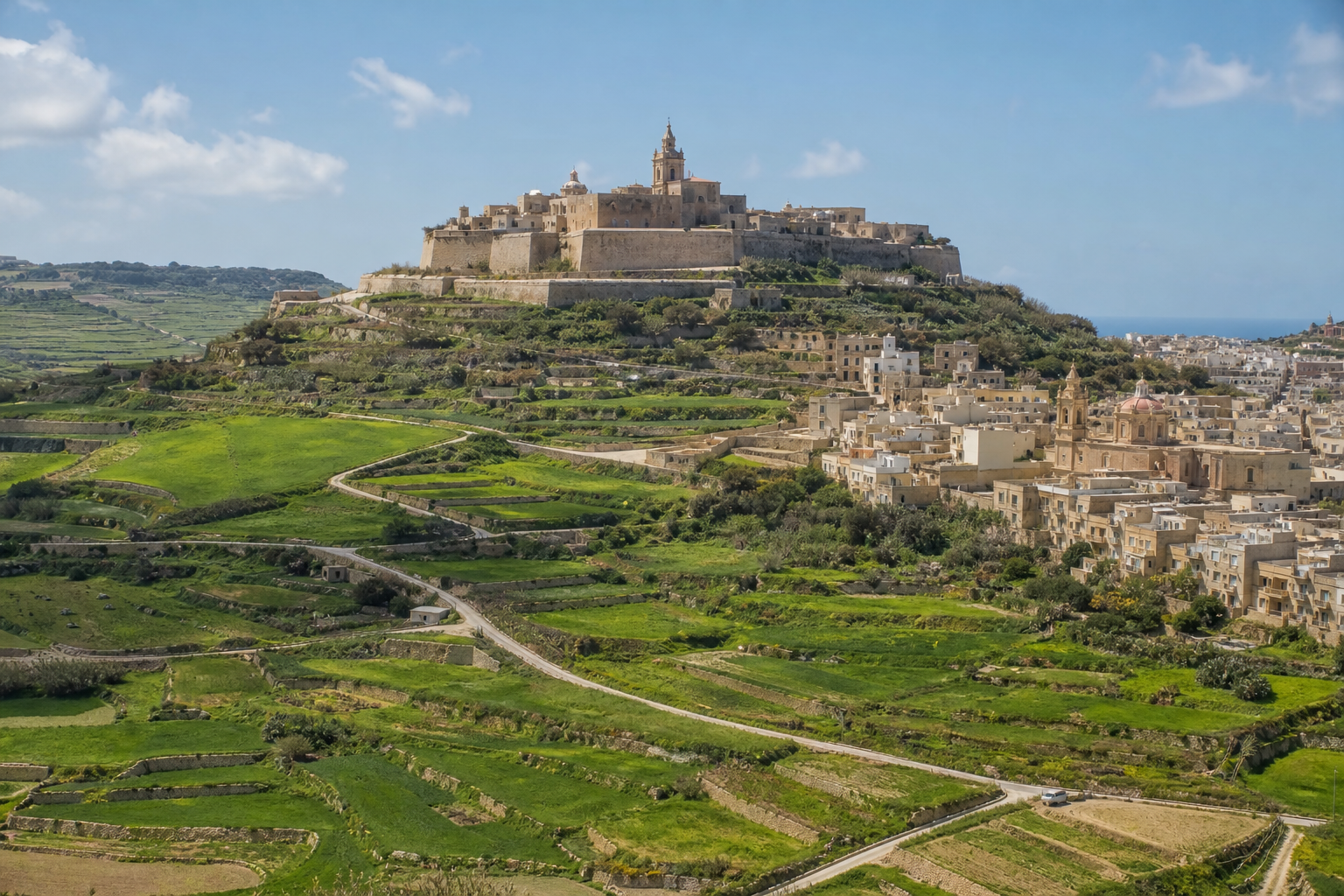
18. Spend at least one day in Gozo
Gozo is greener, slower and more rural than Malta, and almost every visitor says they wish they had spent longer there. The car ferry runs from Ċirkewwa in the north of Malta to Mġarr in Gozo and takes around 25 minutes. You pay on the way back from Gozo, not on the way out. A fast ferry also runs from Valletta.
Our picks for a first visit:
- The Citadel in Victoria, Gozo’s fortified hilltop old town with views over the whole island
- Ta’ Pinu Basilica, a national shrine standing alone in the countryside
- Dwejra and the Inland Sea, where the Azure Window used to stand
- The Xwejni salt pans near Marsalforn, carved into the rock along the shore
- Wied il-Għasri, a narrow gorge with a tiny swimming spot at the end
- Ramla Bay and the Ġgantija Temples
Read our full things to do in Gozo guide.
Villages, food and Maltese life
19. Visit Marsaxlokk on a Sunday
The fishing village of Marsaxlokk is famous for its colourful luzzu boats, painted with the Eye of Osiris. On Sunday mornings the waterfront turns into a big market. Have fresh fish for lunch along the harbour.
20. Eat like a local

Don’t leave without trying:
- Pastizzi, flaky pastries filled with ricotta or peas, for well under a couple of euros
- Stuffat tal-fenek, rabbit stew, the national dish
- Ftira, Maltese bread filled with tuna, capers, olives and tomatoes
- Imqaret, fried date pastries
- A cold Kinnie or a local Cisk beer
21. Join a village festa
From June to September, almost every weekend some village celebrates its patron saint with brass bands, statues carried through the streets, street food and spectacular fireworks. It is the most Maltese experience you can have. Here is why Malta has fireworks all summer.
22. Enjoy an evening in St Julian’s
St Julian’s has the island’s best concentration of restaurants, the pretty Spinola Bay and, in Paceville, Malta’s nightlife district. Walk the promenade from Sliema at sunset, then pick a restaurant by the water. Our guide to the best restaurants in St Julian’s helps you choose.
Outdoors and family fun
23. Walk the countryside
From October to May, Malta’s countryside turns green and is perfect for walking. Try the Victoria Lines, the wild coast of Majjistral Park, Chadwick Lakes after the winter rains, or the mysterious cart ruts at Clapham Junction.
24. Visit Popeye Village
The film set built for the 1980 Popeye musical is now a colourful family attraction at Anchor Bay. Kids love it. If you are travelling without children, the view of the village from the opposite side of the bay is free and just as pretty. See our Popeye Village guide.
25. Let the kids loose in Malta’s parks
When the beaches get too busy, head to Ta’ Qali National Park and its petting farm, the peacocks of San Anton Gardens, or the free Buġibba Water Park in summer. Browse all our family parks and gardens.
What to skip, or plan more carefully
Not everything lives up to the photos at every time of day. Here is our honest advice:
- The Blue Lagoon at midday in August. It is packed, hot and noisy. Go in the early or evening slot, or in June or September.
- The Blue Grotto on a windy day. If the sea is rough, boats don’t run. Check before you drive down.
- Marsaxlokk on a weekday afternoon. It is pretty but quiet. The real buzz is Sunday morning.
- Driving into Valletta. Parking is very hard. Park in Floriana or take the bus or ferry.
- Paceville, if you’re not going out. During the day there’s not much to see. Come for a night out or skip it.
- Trying to do Gozo in a few hours. With ferry times, you’ll only scratch the surface. Give it a full day or stay overnight.
How many days do you need?
3 days in Malta
- Day 1: Valletta, St John’s, Upper Barrakka noon gun, ferry to the Three Cities
- Day 2: Mdina and Rabat in the morning, Dingli Cliffs at sunset
- Day 3: Comino and the Blue Lagoon, or a day trip to Gozo
5 days in Malta
Add a day for the south (Blue Grotto, Ħaġar Qim and Mnajdra, Marsaxlokk and St Peter’s Pool), and make sure you get both Comino and a full day in Gozo.
7 days or more
Stay two nights in Gozo, book the Hypogeum, spend a beach day at Golden Bay or Għajn Tuffieħa, and catch a festa if you visit in summer.
Getting around Malta and Gozo
- Bus: The Tallinja bus network covers both islands. Visitors pay per trip or buy an Explore card. Buses can be slow in summer traffic.
- Ferries: The Valletta to Sliema and Valletta to Three Cities ferries are quick and scenic. The Gozo ferry leaves from Ċirkewwa, and a fast ferry runs from Valletta.
- Car: Useful for Gozo, the south and the west coast. Remember Malta drives on the left and parking can be hard in busy towns.
- Ride-hailing: Bolt and other apps work across the islands and are handy at night.
When is the best time to visit?
- April to June: warm, green and not too crowded. Our favourite time.
- July and August: hot, busy and full of festas. Best for beach holidays.
- September and October: the sea is still warm and the crowds thin out. See things to do in Malta in October.
- November to March: mild, quiet and perfect for history and walking, but some boat trips stop.
Planning around holidays? Check the Malta public holidays, and see what’s on in Malta this weekend.
Frequently asked questions
What is Malta best known for?
Its history, from 5,000-year-old temples to the Knights of St John and Valletta, plus clear blue water, the Blue Lagoon, Gozo and warm weather most of the year.
How many days do you need in Malta and Gozo?
Five to seven days is ideal to see Valletta, Mdina, the temples, Comino and a full day or two in Gozo. Three days covers the highlights.
Is Gozo worth visiting?
Yes. It is quieter and greener than Malta, with the Citadel, Ġgantija, Ramla Bay and dramatic coastline. Plan at least one full day.
Do I need to book the Blue Lagoon?
Yes. Since May 2025, visitors to the Blue Lagoon need to book a free time slot online in advance.
Do I need a car in Malta?
Not for Valletta, Sliema or St Julian’s, where buses and ferries work well. A car makes Gozo, the south and the west coast much easier.
Is Malta expensive?
It is cheaper than many western European destinations, but prices have risen. Street food like pastizzi is very cheap, while beach clubs and Valletta restaurants can be pricey.
What should I wear in Malta?
Light clothes for summer and a layer for winter evenings. Cover your shoulders and knees in churches, and keep beachwear for the beach.
Prices, opening hours and booking rules can change. We check our guides regularly, but always confirm with official sources before you visit. Last updated: October 2026.